Your guide to Brittany
Top destinations in Brittany
Rennes
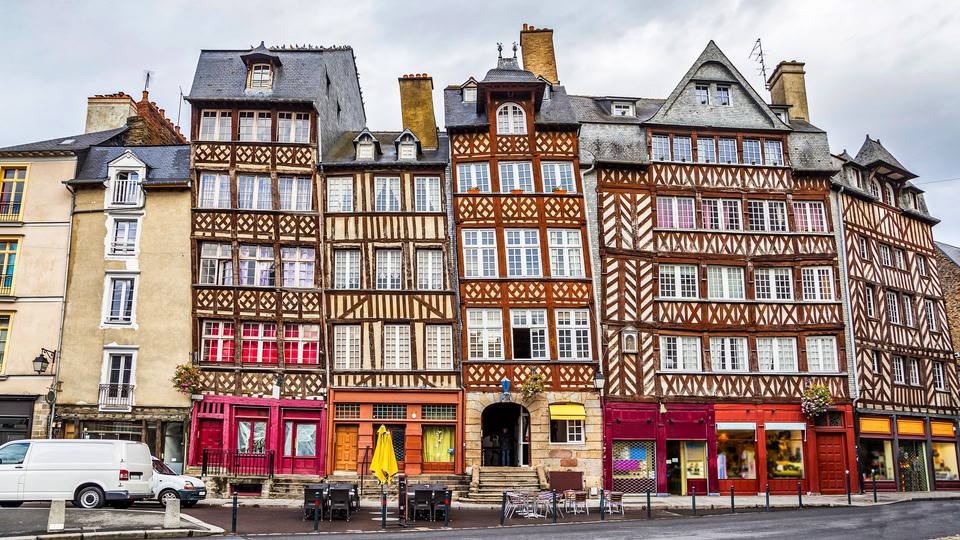
Medieval history meets modern flair in Rennes, Brittany’s up-and-coming capital. Explore lively squares filled with half-timbered houses, then feast on buckwheat crepes.
Brest
This dynamic French city is constantly reinventing itself. Discover a rich seafaring legacy at its marina and museums, or enjoy panoramic views from the cable car.
Lorient
Home to a yacht-filled harbour, an 18th-century watchtower and a sailing museum, this charming French port city combines historical monuments with a seafaring spirit.
Brittany: fast facts
| Language | French |
|---|---|
| Currency | Euro (€) |
| Time zone | Rennes - UTC+1 (CET) and UTC+2 (CEST) |
| High season | June – September |
| Low season | November – March |

Brittany highlights
Local delicacies
No visit to Brittany is complete without sampling the region’s famous ‘galettes bretonnes’ (savoury buckwheat crepes). Considered by some to be the French version of pizza, they usually come served with various fillings, the most traditional being ham, gruyere cheese and egg. Eager to try one? You’ll find restaurants throughout the region dedicated to ‘galettes’ and market vendors selling them too.
Myths and legends
With its Celtic roots, Brittany is steeped in myth and mystery, from tales of giants and fairies to Arthurian legends. Visit the Neolithic Carnac Alignments, which are said to be the Roman legions that Merlin turned to stone. And discover the Cordon des Druides in the Fougères Forest. If you’re feeling your years, head to the Brocéliande Forest, the alleged home of the Fountain of Youth.
Charming small towns
One of the best things to do in Brittany is to explore its ‘Petites Cités de Caractère’ (Small Towns of Character). Ranging from medieval settlements to quaint fishing villages, these scenic spots are known for their maze-like streets, half-timbered houses, art studios and secret gardens. Roscoff, in particular, stands out for its picturesque harbour, and Châteaugiron is famous for its 11th-century castle.
Things to do in Brittany
Top attractions
Walk Saint-Malo’s granite ramparts at low tide to access hidden beaches like Plage de Bon-Secours with its seawater pool. At Fougères Castle, time your visit with golden hour to see the medieval towers glowing over the moat. Over on the Pink Granite Coast, the village of Ploumanac'h’s famous rock formations make a picture-perfect backdrop for a coastal hike.
Beaches
Claiming a third of the country’s coastline, Brittany has some of France’s most beautiful and ruggedly wild beaches. Uncrowded Plage du Sillon in Saint-Malo is a favourite with families. And Plage de la Mine d’Or in Pénestin is known for its sunsets. Looking to surf? Hang ten at Baie des Trépassés on Cap Sizun or Plage de Saint-Tugen in Audierne.
Nature
Brittany has a wealth of natural beauty to explore, from its Pink Granite Coast to the Arthurian Brocéliande Forest. Admire Atlantic Ocean views from Pointe du Raz and stroll across the salt meadows in Mont-Saint-Michel Bay on the Normandy border. For some of the region’s richest sea life, visit the Iroise Marine Natural Park — you may spot grey seals and dolphins.
Cuisine
Beyond the buckwheat crepes, there’s a whole host of delicious local specialities to try at restaurants in Brittany. The small town of Cancale is known for its outstanding oysters. And if you have a sweet tooth, dig into ‘far Breton’ (custard cake) and ‘kouign-amann’ (flaky pastry). Looking to drink like a local? Pop the cork on a bottle of dry sparkling Breton cider.
Culture and museums
History enthusiasts won’t want to miss the region’s war memorial sites, including Saint-Marcel’s Musée de la Résistance en Bretagne. And one of the best art museums in Brittany is the Musée des Beaux-Arts de Rennes. Visiting in August? Head to Pont-Aven, once home to post-Impressionist painter Paul Gauguin. Stick around for the Fête des Fleurs d'Ajonc, a traditional Breton festival.
Nightlife
Rennes is home to some of the best nightlife in Brittany. Head to Rue Saint-Michel — nicknamed ‘Thirst Street’ — for popular late-night watering holes. In Brest, Hôtel Vauban’s basement concert hall has been the go-to place for live music since the 1960s. Looking for a more mellow scene? Make a beeline for Vannes’ old town wine bars.
Find the best time to visit Brittany
Weather in Brittany through the year
March – May: Spring in Brittany is generally mild, though rain showers are common. Pack layers and a light waterproof jacket for the changeable weather. This is a great time to see wildflowers along the GR34 coastal path.
June – August: Summer brings long days and warm temperatures, with highs averaging 21°C. It’s the ideal season for beach visits, outdoor markets and festivals.
September – November: Expect crisp temperatures and frequent rain showers, especially along the coast. It’s a popular time for foraging and admiring the autumnal foliage in Brocéliande Forest.
December – February: Winters rarely drop below freezing, but you can count on wind and rain. Be sure to take advantage of the Christmas markets — Brest hosts one of Brittany’s largest.
Events in Brittany
Les Vieilles Charrues (July): France’s biggest music festival draws huge crowds with its international headliners and homegrown talent. Expect everything from pop to punk and plenty of local food stalls.
Fête des Remparts (July): Held every other year in Dinan, this medieval festival is always popular for its jousting tournaments, craft markets and re-enactments, all set against the town’s 13th-century ramparts.
Festival Interceltique de Lorient (August): Celtic culture takes centre stage at this 10-day festival in Lorient. Performances from across the Celtic nations include traditional music, dance and a grand parade.
Christmas markets (November to January): Head to Brittany’s Christmas markets for artisan gift stalls, mulled cider and carol singers. Rochefort-en-Terre’s is particularly festive, with its half-timbered houses featuring light displays.
Know before you go
Budget
The region is pricier during the peak summer season. But an inexpensive visit to Brittany is still very doable, especially during the shoulder seasons. Expect to pay less than 15 euros (€) for a simple meal and under €10 for a short taxi ride. Ordering a coffee? You’ll usually pay around €2.
Health and safety
Overall, Brittany is a low-risk destination, with no recommended shots beyond routine vaccinations. Weather can sometimes be unpredictable on coastal walks, so pack sun cream, sturdy shoes and layers for the trails. You’ll often find ticks in forested areas like Brocéliande, so apply insect repellent and check your skin for bites after hikes.
Free things to do
Follow the GR34 coastal path from Plouha to Paimpol for picturesque views over Île-de-Bréhat. In Saint-Malo, walk along the old city walls from Porte Saint-Vincent to Bastion de la Hollande to discover its history as a base for government-backed pirates. Feeling brave? Head to the ancient Huelgoat Forest, where legend says the Grotte du Diable hides a path to the underworld.
Family friendly
Snorkel in Baie de Morlaix’s calm waters, where curious kids might spot starfish and sea anemones. In Beffou Forest, autumn brings the chance to forage for mushrooms like porcini and girolles (best done with a local guide). And at Fougères Castle, little adventurers can roam ramparts and towers straight out of a storybook.

Getting around Brittany
Public transport
Buses: Brittany’s affordable regional BreizhGo bus network connects major towns and cities with smaller inland villages and coastal resorts. Schedules can be limited on weekends and during holidays.
Trains: High-speed TGV trains make Rennes an easy hop from Paris in under two hours. From there, TER regional services branch out to places like Saint-Malo, Vannes and Quimper. In summer, take the scenic Tire-Bouchon train from Auray to Quiberon. It skips the route’s notorious traffic and hugs the coast for excellent scenery.
Boats: Ferries run from ports like Quiberon and Vannes to nearby islands like Belle-Île, Île-aux-Moines and Île-de-Groix. Tickets can sell out during the peak summer months, so book ahead if you’re island hopping.
Domestic flights
While most travellers arrive by train or car, there are a few small airports in cities like Brest and Rennes that offer limited connections to other parts of France, including Paris and Lyon.
Driving and car hire
Driving in Brittany is generally safe and easy thanks to well-maintained roads and clear signage. The N12 is the main artery linking Rennes to Brest, while smaller routes like the Route des Phares and the Route des Abers offer plenty of coastal scenery. Brittany is France’s only highway-free region, so no need to worry about tolls.