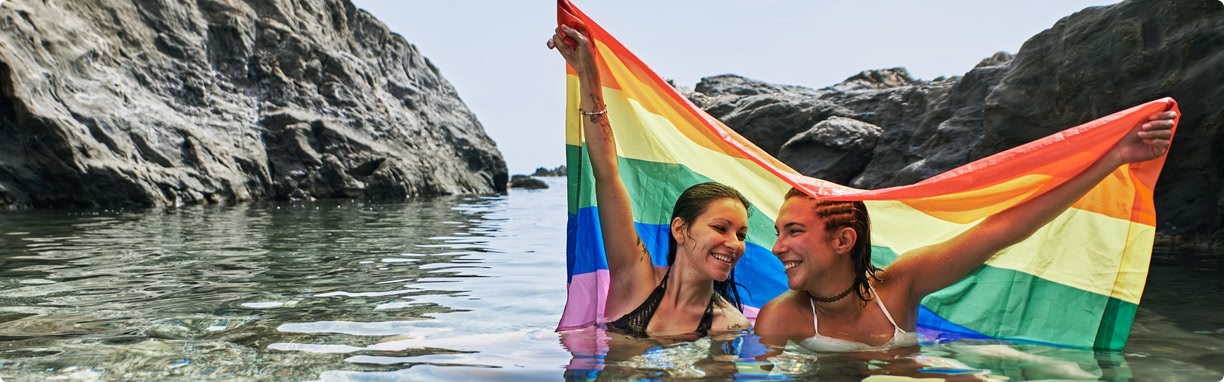
Travel has always been political for LGBTQ+ people. The good news is, there are more resources, communities, and LGBTQ+-affirming travel options available today than ever before. The not-so-good news is knowing where to find them still takes work. To help cut through the noise, I reached out to some of the sharpest minds in LGBTQ+ travel — advisors, editors, marketers, and community builders — for their best advice. Here's what they had to say.
For the better part of a decade, I've been navigating LGBTQ+ travel professionally as the founder of EveryQueer, a travel media company built for queer women, transgender, and non-binary explorers. I've learned that the difference between a trip that feels liberating and one that feels exhausting often comes down to how well you've prepared.
Legal protections and cultural acceptance vary widely by destination, and "all are welcome" signage doesn't always mean what we need it to mean. So, let's look at ten ways you can improve your experience and have the vacation of your dreams, as it should be.
1. Start your research with IGLTA
Founded in 1983, IGLTA aims to assist travellers in navigating LGBTQ+ travel challenges by offering a variety of trip planning resources and LGBTQ+ welcoming travel experiences from its members. Legal protections and cultural acceptance vary widely by destination. IGLTA’s marriage equality guide allows travellers to explore which countries and regions around the world offer same-sex marriage.
In addition to marriage equality, the guide also features an application that sources LGBTQ+ rights and protections in over 250 countries and regions around the world. While marriage equality isn’t the only consideration for travel planning, it’s a great start for couples looking to plan a romantic holiday. It also acts as a baseline for understanding where the destination is on their road towards acceptance.
2. Book with an LGBTQ+ travel advisor
Jove Meyers, a well-known wedding and events planner, suggests hiring an LGBTQ+ travel advisor. As a member of the LGBTQ+ community himself, Jove frequently assists his couples with their honeymoon plans: “The best way to know about a location is to partner with an amazing travel advisor, someone who specialises in LGBTQ+ travel, as they will know best where you can go and be yourself without worry or fear.”
An amazing travel advisor can help you book with travel partners, hotels and activities that are LGBTQ+ loving so that you can avoid uncomfortable and/or awkward moments during your trip. Ed Salvato, an LGBTQ+ Marketing Specialist, echoed Jove’s tip. “An LGBTQ+ travel advisor like Kelli Carpenter understands that resorts who declare that “all are welcome” may not truly include us. She’ll make sure you’re seen, celebrated and affirmed.”
3. Use LGBTQ+ travel media outlets
Uwern Jong, the Chief Experientialist at OutThere Magazine is on the Board of Directors for IGLTA. Uwern recommends “researching hotels, resorts, experiences and destinations that are truly part of and have taken the time to engage with or learn from the LGBTQ+ community and be very aware of rainbow-washing. The best travel providers have some sort of LGBTQ+ accreditation, are doing something that gives back to the community as well as their LGBTQ+ staff, and are investing in training and development to ensure that their non-LGBTQ staff understand the needs of travellers and become allies to the community.”
For detailed LGBTQ+ travel information, check out EveryQueer, Out Traveler, Diva Magazine, and OutThere Magazine.
4. Connect with local LGBTQ+ people
Some of my most memorable travel experiences are the ones where I was immersed with the local community. I recently traveled to Argentina where I exclusively hung out with local people. The queer women I met on the trip took me under their wings and gave me an insider’s look at queer life in Buenos Aires. Local LGBTQ+ people are always the best source of information for travel questions around safety, community, and events.
A good way to get in touch with local people is through social media and dating apps. Connect with local LGBTQ+ people via Facebook groups, search Instagram hashtags in the language of the country you’re visiting, and don’t forget to reach out via dating apps like HER, Grindr, or Scruff.
Safety tip: Please always be wary of the environment you are traveling to and of the attitudes to LGBTQ+ people there, before trying to connect with people you don't already know.

5. Stay with an LGBTQ+ affirming accommodation
Finding LGBTQ+ affirming accommodations ensures that wherever you’re resting your head, you’re doing so in an environment where you’re safe and welcomed. With so many options, it can be tough to decide what the best scenario is for your loved ones. Airbnbs can offer a level of privacy that hotels may not, but staying at a hotel or resort can give you access to staff who can guide you to local people in the LGBTQ+ community.
Unfortunately, while hotel or Airbnb reviews may mention safety, they often won't speak specifically to our concerns as queer travellers. To combat these issues, LGBTQ+ marketing expert Ed Salvato recommends “choosing hotel chains like Marriott, Hilton, Hyatt and Accor because they offer their customer-facing staff a minimal level of LGBTQ+ training."
For luxurious, LGBTQ+-welcoming accommodations, try Preferred Hotels.
6. Follow LGBTQ+ travel influencers
One of the best things about LGBTQ+ travel content creators is how specific they get. There's no monolithic queer travel experience, and the best influencers reflect that. Each creator brings their own identity, travel style, budget, and interests to their content. Whether you're looking for luxury lesbian travel, queer family adventures, or budget backpacking with a trans perspective, there's someone out there documenting it.
Following creators who share your identity or travel sensibility is one of the most practical forms of trip research you can do. When I see Gabi and Shanna of 27 Travels rave about a destination, I know it's worth adding to my list — our tastes align closely enough that their enthusiasm is basically a personal recommendation. That kind of community shorthand is something no algorithm-generated "top 10" list can replicate.
Creators also give you something guidebooks can't: a real sense of how you'll be perceived in a destination. Watching someone who looks like you move through a city — how they're treated, what they wear, where they go will tell you more about on-the-ground reality than any official tourism board statement will.
7. Find LGBTQ+ specific cultural centres
In many destinations, there are LGBTQ+ centres, historical sites, or entire gayborhoods dedicated to helping you while you are there traveling. For example, The LGBTQ Center in New York City has access to travel guides and information to point you in the right direction for your specific interests. Visiting local gayborhoods like the Chueca District in Madrid gives you an insider’s take on the LGBTQ+ culture in Spain.

8. Plan your trip around LGBTQ+ events
Planning your trip around local Prides or an LGBTQ+ festival or events guarantees a connection to the local community. Events like Rose Girls in Buenos Aires or Bangkok’s White Party bring together locals and travellers alike to celebrate the queer community outside of Pride festivals.
Uwern Jong of OutThere Magazine says, “traveling for events allows you to support a destination’s local LGBTQ+ community, but you’ll be able to meet and network with like-minded people from all over the world, who are as passionate about travel and equality as you are.”
If you need help finding local events, IGLTA has published a series of LGBTQ+ travel guides for many countries around the world, and it also maintains a Pride Calendar featuring hundreds of pride events worldwide.
9. Consider group travel for safety
In many countries, LGBTQ+ people still face criminalisation, discrimination or legal uncertainty. Traveling with a group can help keep the trip safe and let you experience the wonders of the world in an affirming way.
Traveling with others also allows you to blend in, while still seeing destinations like the Pyramids of Giza or Bali. Book with LGBTQ+ owned EveryQueer, R Family Vacations or Source Events.
10. Make a destination-specific safety plan
Even after choosing LGBTQ+-friendly hotels or researched the local community, making a simple safety plan can keep your vacation safer and avoid incidents. Save local emergency numbers, keep your accommodation details handy when you're out, and share your itinerary with someone you trust.
Additionally, research countries you'll be transiting through. Even if you're heading to an LGBTQ+ -welcoming destination, laws and attitudes at stopovers may be very different.
Final thoughts: traveling safer and more joyfully as an LGBTQ+ person
While the LGBTQ+ community is becoming more widely accepted today, queer voices remain vastly marginalised around the world. As a community, we face challenges because LGBTQ+ social acceptance, policies, and protections vary widely. I’ve spent the last decade championing LGBTQ+ issues around the globe, but if I’ve learned anything, it’s that travel is immensely personal. Our identities impact our travel decisions and experiences, but they do not prevent us as LGBTQ+ people from exploring the world. With the right resources, LGBTQ+ explorers can have just as safe and rewarding travel experience as our straight/cis peers.
Frequently asked questions about LGBTQ+ travel

About the author
Meg Ten Eyck is the CEO of EveryQueer, the leading resource for LGBTQ+ travel content, tours, and brand consulting. She teaches queer travellers how to safely explore the world. Meg is an internationally recognised expert, cited in UNWTO and ETC tourism reports, and is the Chairperson of the Board of Directors of the International LGBT Travel Association. A published author and global speaker, she has visited 80+ countries and her content has reached over 50 million people.
Skyscanner can help you find the best flight, hotel, and car rental deals for your next trip.


