Planning a road trip in an unfamiliar country takes some time, especially when it’s your first one, but choosing the right destination can make all the difference. In this guide, we’ve ranked seven road trip destinations, focusing on destinations that offer affordable car rental costs, good road safety initiatives, beginner-friendly driving conditions, and plenty of attractions along the way. No vague recommendations, just plenty of information so you make the best decision.
Our methodology: how we ranked the destinations
We took a range of factors into account when scoring and ranking each destination. These factors include:
Road safety
We looked at the number of road incidents, road quality, and any policies the country’s government has in place to uphold and improve road safety standards.
Car hire costs
We used our own data on car hire costs, which looks at average daily rental rates across the year.
Driving conditions
We looked at traffic levels, weather, and local driving culture. By driving culture, we mean the collective attitudes and approaches towards driving that can vary between countries. For example, drivers in the UK lean towards giving way, while drivers in Italy are known for being more assertive.
The top 7 destinations for first-time road trippers
No matter which corner of the globe takes your fancy, there’s a destination on this list for you, from the cool calm of northern Europe to the tropical climate of southern Asia.
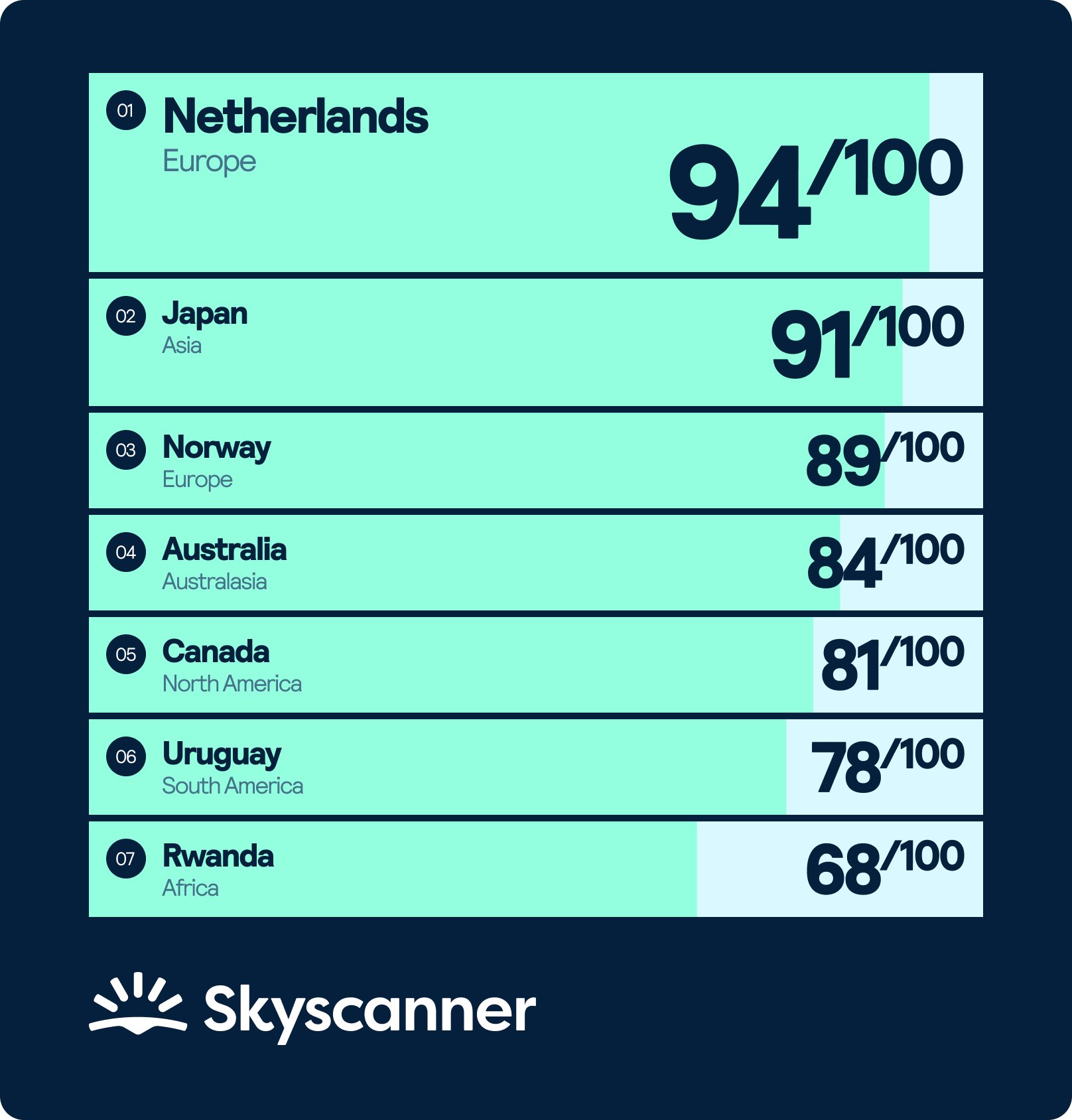
1. Netherlands, Europe
Overall Score: 94/100
Drives on: Right-hand side
Pros: Outstanding infrastructure; excellent safety record; relatively low rental costs; flat terrain
Cons: Cycle infrastructure can be confusing for drivers not used to it
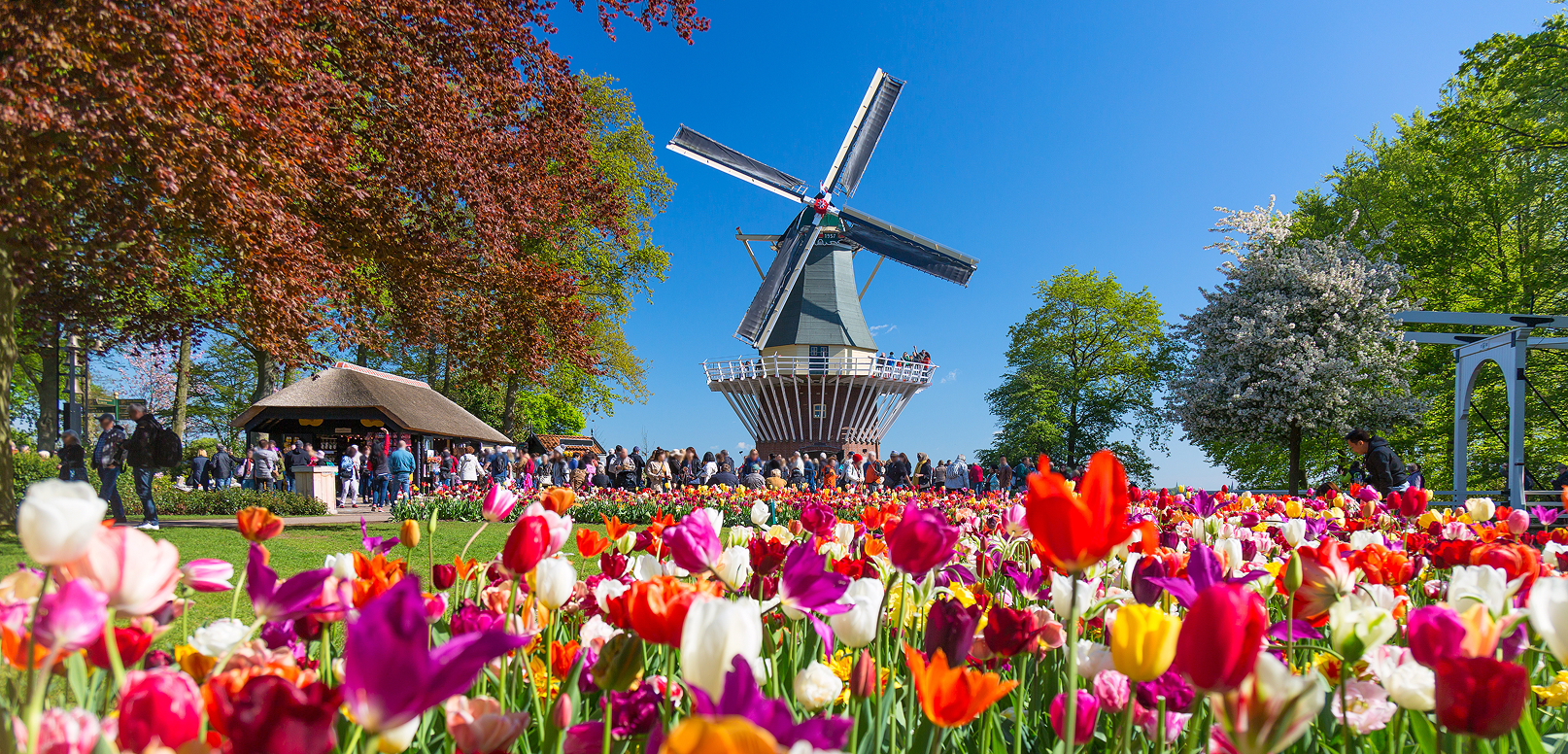
Potential road trip route: Drive from Haarlem to Leiden – it's only around 40 miles, with plenty of scenic stops. Time your road trip for spring so you can see Lisse’s Keukenhof Gardens bloom at their best. Want more? The Hague is 30 minutes away from Leiden and is close to the Hyacinth Forest.
Road safety
The Netherlands has one of the strongest road safety records in Europe, especially compared to average EU figures. This is a result of decades of policy, investment, and urban planning focused on reducing harm. The country has consistently worked to lower road deaths through a combination of strict traffic laws, well-designed road infrastructure, and protection for vulnerable road users such as cyclists and pedestrians.
While the number of severe road incidents has fallen significantly over the past few decades, the authorities continue to push for further reductions, with ongoing national road safety plans like SPV 30 targeting both driver behaviour and road design. The goal of SPV 30 is to move towards the ultimate goal of zero victims.
Seatbelt use is compulsory for all occupants in every seat where a belt is fitted, no matter where they’re sitting in the car. Children must be secured in an appropriate child restraint until they reach 1.35m tall. Enforcement of seatbelt laws is taken seriously: police carry out routine checks and issue on-the-spot fines to anyone found not wearing a seatbelt (or to the driver if a child is unrestrained).
Drink-driving laws are strict, with a legal blood alcohol limit of 0.05% for most drivers and 0.02% for newly qualified drivers during their first five years on the road. Using a mobile phone while driving is illegal without a hands-free setup.
Car hire costs
Car hire in the Netherlands can be between approximately £29 and £47 per day, depending on the time of year you travel.
Driving conditions
The Netherlands has a well-maintained road network, making it a pleasant country to drive through, but pay careful attention, particularly around cyclists and pedestrians. Cycle lanes are everywhere, and Dutch cyclists are confident road users who expect drivers to give way. Always check your mirrors and blind spots carefully before turning, opening car doors, or pulling away from the kerb.
Speed limits are strictly enforced: 50 km/h (31mph) in built-up areas, 80 km/h (50mph) on regional roads, and 100 km/h (62mph) on motorways. Speed cameras are common, fines are steep, and traffic wardens in cities are active.
Check the weather forecast and road conditions before you set off, as the Dutch meteorological service (KNMI) issues warnings for severe wind, ice, and fog. The Netherlands may not have the dramatic mountain weather of some European countries, but its climate can still pose challenges:
Rain is frequent throughout the year, making roads slippery.
On motorways, spray from other vehicles can cut visibility significantly, so slow down, increase your following distance, and switch on dipped headlights whenever conditions deteriorate.Fog can be a hazard in autumn and winter.
Use fog lights when visibility drops below 100 metres and remember to switch them off once conditions improve.Strong winds are common near the coast,
on exposed stretches of motorway, and on bridges, where gusts can catch vehicles without warning. Take bridges slowly and keep a firm grip on the wheel.While heavy snow is uncommon, icy conditions do occur in winter
and can be particularly treacherous on rural roads and bridges, which freeze before main carriageways.
2. Japan, Asia
Overall Score: 91/100

Drives on: Left-hand side
Pros: Exceptional safety; courteous drivers; excellent road quality and signage
Cons: Toll roads; some narrow streets
Potential road trip route: Drive from Naha up to Cape Hedo in the Okinawa island region. There’s a laidback feel, with plenty of beaches to enjoy, and the slow speed limits make it easier to get used to driving in Japan.
Road safety
The number of accidents and injuries on Japan’s roads has declined for two years running. Police take traffic law enforcement seriously, targeting unlicensed drivers, drivers under the influence, speeding, and ignoring traffic signals. The country has a reputation for more orderly driving compared to other countries in Asia.
The roads are well maintained and well organised, with surfaces in good condition. Signs usually display messages in Japanese and English for easy interpretation allowing you to focus on the road ahead of you.
Roads in older towns, rural villages and some urban residential areas can be narrow, so we recommend hiring a smaller car if you’d like to navigate these. If you’re only visiting major cities like Tokyo, Kyoto and Osaka, it’s more practical to rely on Japan’s fast, affordable public transport, like the Shinkansen (bullet train). Driving comes into its own in destinations that public transport doesn’t reach.
Car hire costs
Hiring a car in Japan can cost between approximately £43 and £74 per day, depending on the time of year.
Driving conditions
Japanese driving culture is generally calm and considerate. Drivers tend to be patient, allow merging without aggression, and give space for manoeuvres such as reverse parking.
However, there are a few important norms that may differ from what you’re used to:
A complete stop, not a rolling slow-down, is required at stop signs.
Traffic lights are often positioned on the far side of the junction rather than where you stop, which can make the available stopping distance seem greater than it actually is.
Right turns at red lights are not permitted if you’re already in the intersection when the lights change.
The positions of indicators and wipers are reversed compared to European or American vehicles – indicators sit on the right side of the steering wheel and wipers on the left.
Speed limits vary by road type and are clearly signposted, and toll roads are common on expressways. An ETC card, available through most rental companies, simplifies payment at toll gates.
Seasonal and regional weather conditions can have an impact on driving, particularly in winter. Snowfall is significant in areas such as Hokkaido, the Japanese Alps, and parts of the Sea of Japan coast, and snow tyres are strongly advisable (and, in some areas, essential) when driving in these regions between late autumn and spring.
Outside of winter, road conditions are generally reliable, but mountain and rural routes may still require care due to narrow lanes, sharp bends, or limited visibility. Planning your route before you set off, including rest stops and fuel stations, is a sensible habit. Japan has excellent roadside rest areas known as michi no eki, which offer toilets, food, and a chance to take a proper break, though they don’t sell fuel.
3. Norway, Europe
Overall Score: 89/100

Drives on: Right-hand side
Pros: Safe driving culture; high road quality
Cons: Toll roads; variable weather; some winding rural roads
Potential road trip route: Try the Hardangerfjord Tourist Route, which is a rare combination of genuinely breathtaking scenery without the technical difficulty that makes some alpine routes nerve-wracking. You’ll pass glaciers, cascading waterfalls, and orchards in full bloom.
Road safety
While the 2025 figures haven’t been officially confirmed yet, Norway has seen the number of serious injuries caused by road incidents decrease by 18% between 2014 and 2024, despite the number of vehicles on the road increasing.
The country was awarded the ETSC’s PIN Award in June 2025 for its commitment to road safety, which includes initiatives like:
Vision Zero, a strategy started in 2001
A research programme that evaluates road safety interventions.
Amendments to existing laws.
Strict training for learner drivers.
Double penalty points for new drivers.
Car-free areas around schools.
You must keep your headlights on at all times. It’s compulsory to wear a seat belt and children under 135cm in height must have a child restraint.
Car hire costs
Norway car hire costs can be between an approximate average of £34 and £78 per day, depending on what time of year you travel.
Driving conditions
Key cities are connected by major roads and motorways, which have automatic toll booths. Traffic is usually light outside urban rush hours. Many rural roads are narrow and winding and so take longer to travel along.
The biggest factor that affects driving conditions in Norway is the weather, especially in rural, mountain and high-altitude areas. Snow, wind and frost can cause slippery roads, reduced visibility and sudden weather changes, particularly in spring and autumn. Take extra care in winter too and consider studded tyres or snow chains when snow or ice are expected. If you’re hoping for a smoother journey, consider travelling in summer, when temperatures are mild (and even warm in some southern inland areas).
4. Australia, Australasia
Overall Score: 84/100
Drives on: Left-hand side
Pros: A variety of scenery; economical (especially if travelling in a group); access to remote locations
Cons: Long distances; fuel is expensive in remote areas; wildlife hazards
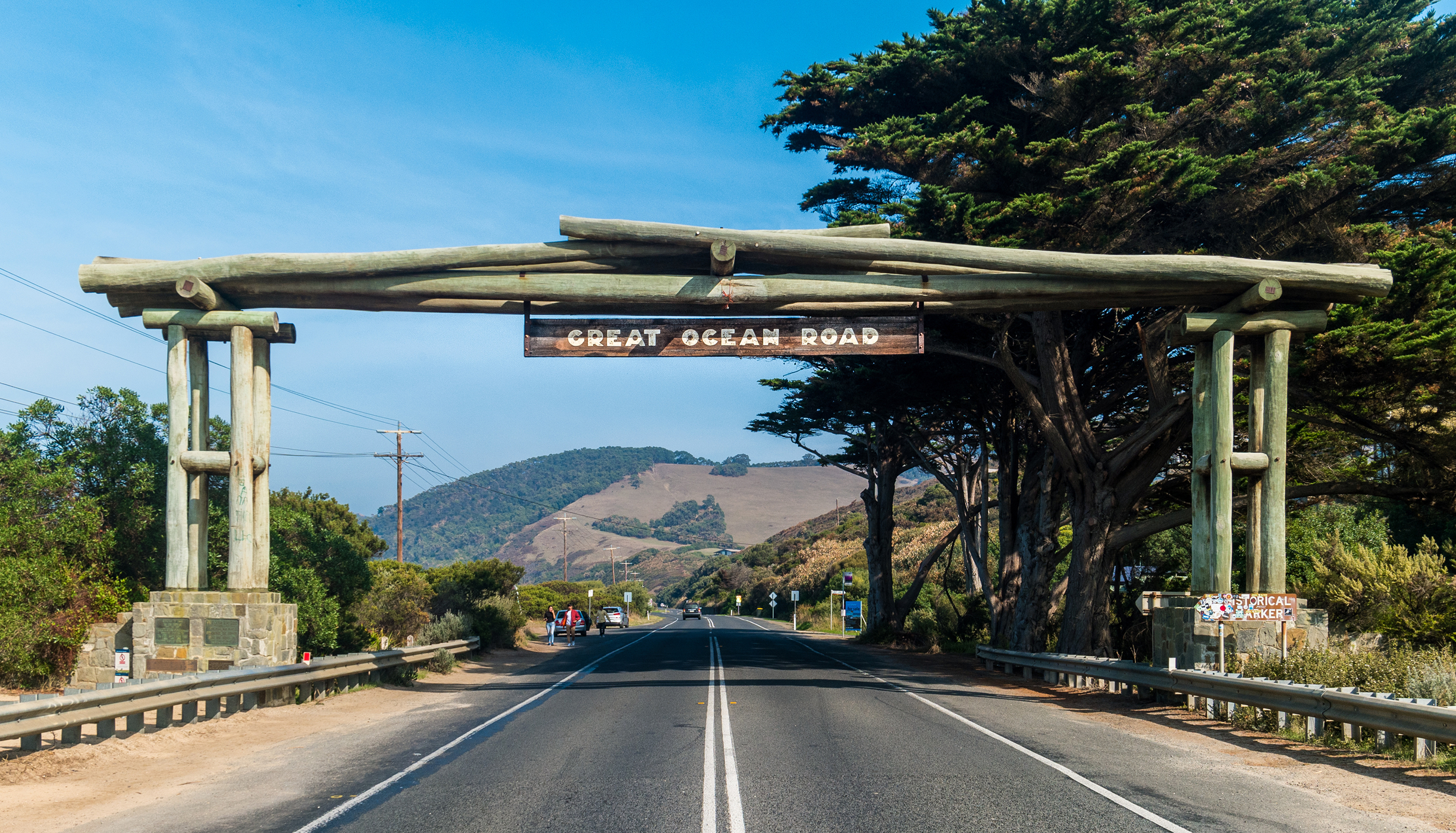
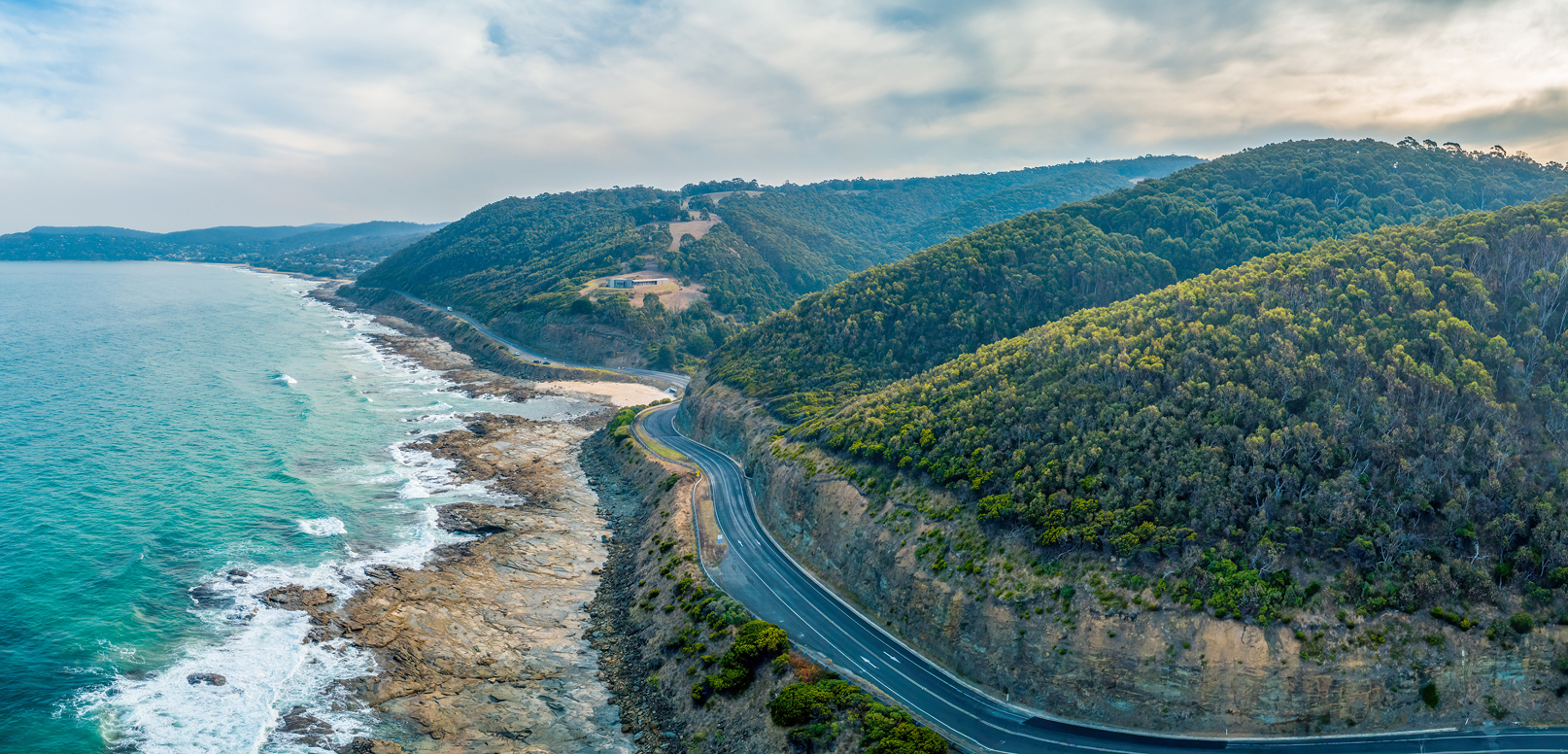
Potential road trip route: The Great Ocean Road has a reputation as one of the best drives in Australia and is ideal for beginners thanks to the excellent quality of the road. You can do it in a day, but it’s far more enjoyable to slow down and spend time at all the stops along the way.
Road safety
All levels of government work together towards Australia’s version of Vision Zero: zero deaths and serious injuries on Australian roads by 2050. This is the foundation of Australia's National Road Safety Strategy 2021-30, which sets binding targets like reducing serious injuries by at least 30% by 2030.
Australia's road quality varies depending on where you’re travelling. In major cities and along main intercity routes, roads are generally well maintained, clearly marked, and easy to navigate. The further you travel away from these areas, however, the more conditions can change.
Regional roads may have rougher surfaces, narrower lanes, or sections affected by weather damage, and in remote outback areas, unsealed dirt roads are common, some of which will require a high-clearance or four-wheel-drive vehicle to manage safely. It’s also worth keeping an eye out for wildlife, as there’s a considerable risk of hitting creatures like kangaroos, koalas, wombats or livestock. While your instinct may be to swerve, doing so can cause you to drive into another vehicle or a tree. Instead, slow down and use your headlights and horn to encourage the animal to leave the road.
We’d recommend carrying plenty of fuel, water, and supplies on longer remote routes where services may be few and far between.
Car hire costs
Hiring a car in Australia can cost between approximately £38 and £68 per day, depending on the time of year.
Driving conditions
Driving conditions in Australia vary enormously depending on your location and route. In cities such as Sydney, Melbourne, and Brisbane, traffic can be heavy during morning and evening rush hours, and you may find you’ll need extra patience on busy roads and motorways. Urban drivers are generally orderly on motorways, but city traffic can test that at times. Keep left unless overtaking, watch out for sudden braking, and give buses and large vehicles plenty of space.
Highway driving between major towns is straightforward but can involve very long distances with few service stops, making fatigue a risk. On remote outback routes, the isolation becomes a practical concern, as roadhouses may be hours apart, and mobile coverage can be limited or non-existent. Plan your fuel stops carefully, carry extra water and supplies, and take regular breaks on long drives, particularly if you’re travelling solo. It’s also very helpful to download offline maps before you leave.
Weather is one of the most important factors to consider when driving in Australia – and it can change quickly. Conditions differ by region and season; in tropical northern areas, the wet season brings intense rainfall and flooding that can close roads for days; even roads that appear passable can be dangerous to cross when water is running over the surface. In summer, extreme heat affects road surfaces and increases the risk of tyre blowouts, and bushfire smoke can reduce visibility to near zero without much warning. Check weather forecasts and road condition updates before setting off on any major journey and be prepared to adjust your plans if the conditions change.
5. Canada, North America
Overall Score: 81/100
Drives on: Right-hand side
Pros: Strong safety standards; well-maintained highways
Cons: Long distances; wildlife hazards; harsh winters
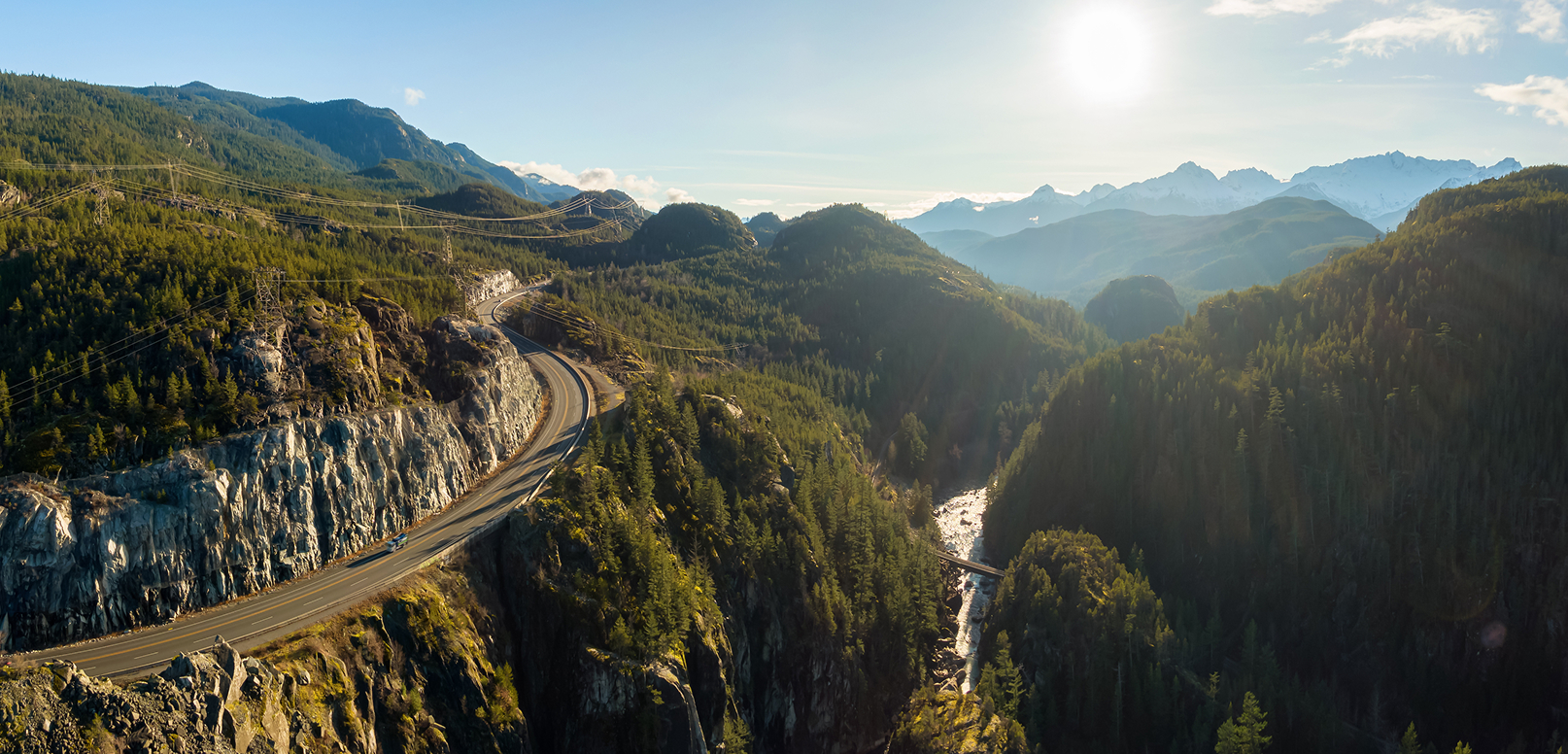
Potential road trip route: Drive from Vancouver to Whistler, or vice versa. It’s a short drive with ocean views on one side and mountain views on the other, so you can really slow down and take in the dramatic scenery.
Road safety
Canada has a strong road safety framework, especially compared to its neighbour the US. The most recent motor vehicle data report showed that total number of injuries from road accidents has decreased by 42% since 2003, even though the numbers of vehicles and drivers increased. Laws vary by province and territory, so check the specific rules for each region you plan to drive through. Be wary of leaving main roads or routes, as you could accidentally find yourself in the wilderness.
Drink-driving is treated seriously across the country. Most provinces set the legal blood alcohol limit at 0.08%, though several have introduced lower administrative limits of 0.05% that trigger immediate license suspensions and fines.
Using a handheld mobile phone while driving is banned nationwide, with penalties ranging from fines to demerit points depending on the province.
Seatbelts are compulsory for drivers and all passengers in every province and territory, and the rules are actively enforced through police checks and on-the-spot fines. Child restraint laws apply in every province, with requirements based on age, weight, and height. Children must progress through rear-facing seats, forward-facing seats, and booster seats before moving to a standard seatbelt. It is the driver's legal responsibility to ensure that all passengers under a certain age are properly restrained.
Car hire costs
Car hire in Canada can be between approximately £50 and £87 per day, depending on the time of year.
Driving conditions
Long driving distances, remote rural highways, wildlife crossing roads unexpectedly, and severe weather can impact driving conditions.
Speed limits on highways typically sit between 90 and 110 km/h (55 and 68mph), though conditions often warrant driving well below the posted limit.
In autumn and winter, ice and snow can make roads difficult to traverse. Winter tyres are compulsory in some provinces, including British Columbia and Québec, and strongly advisable elsewhere. As beautiful as freshly fallen snow is, we recommend travelling when the weather is milder if you don’t want to tackle these conditions.
6. Uruguay, South America
Overall Score: 78/100

Drives on: Right-hand side
Pros: Stronger safety standards than many regional peers; calm driving culture; inexpensive car rentals
Cons: Some urban driving challenges; less developed infrastructure
Potential road trip route: Start in Colonia del Sacramento, make your way to Montevideo, then continue on to Punta del Este. The drives between big cities are the easiest for beginners and you’re never too far from the coast.
Road safety
Uruguay has stronger road safety laws than many other countries in South America, which is why it earned a spot on this list.
They have a zero-tolerance policy for drink-driving – the legal blood alcohol limit is 0.0% – and impose considerable penalties on anyone who’s caught.
Speed controls like cameras and checkpoints are used on key routes.
Seatbelts are compulsory for all occupants in both front and rear seats, and child restraint requirements apply based on age and size.
Uruguay’s road quality is higher than in other countries on the continent, especially on the main national highways that connect Montevideo with destinations like Colonia del Sacramento and Punta del Este. These routes are mostly paved and well signposted, making them a great option for a road trip.
Car hire costs
Car hire in Uruguay is approximately £36 per day on average.
Driving conditions
Driving culture in Uruguay is generally more relaxed and orderly than in some neighbouring countries but can vary depending on the area. In Montevideo, traffic can be busy and assertive, with close following distances and occasional disregard for lane markings. Some motorcyclists and scooter riders may weave through traffic. Driving is generally calmer outside the capital, although rural roads are often shared by livestock crossing, agricultural vehicles, cyclists and pedestrians, so stay alert if you venture out there.
During the summer holiday season from December to February, traffic levels on coastal routes towards Punta del Este and the eastern beaches increase and journey times can lengthen considerably.
Fatigue is a risk on long stretches between towns, given the open, flat landscape of much of Uruguay, so we recommend regular stops.
Weather is temperate and relatively mild year-round, but it can still affect driving conditions more than visitors anticipate. Rain falls throughout the year with no strongly defined dry season, and wet roads can reduce grip significantly. Fog is fairly common in the early morning, especially in low-lying and coastal areas, and can reduce visibility. Strong winds are a regular feature of the Uruguayan climate, particularly on the coast and open plains, and can affect vehicle stability, especially for campervans, vehicles towing trailers, or any car with a roof load.
7. Rwanda, Africa
Overall Score: 68/100

Drives on: Right-hand side
Pros: Good enforcement of traffic laws; orderly conditions in Kigali
Cons: Variable road quality; higher rental costs
Potential road trip route: Start in Kigali, the capital, and make your way to Lake Muhazi, near Akagera National Park. It’s a short drive through rolling hills to the tranquility of the lake.
Road safety
Obeying all traffic signs, signals, and road markings and staying observant of the behaviour of other road users forms the foundation of safe driving in Rwanda. Road safety laws are actively enforced and should be taken seriously. Seatbelts are compulsory for all occupants and using a handheld mobile phone while driving is prohibited. Speed limits are posted throughout the country and enforced using radar guns and police checkpoints, with fines issued for violations.
Car hire costs
Car hire in Rwanda is approximately £83 per day on average.
Driving conditions
Kigali, Rwanda's capital, has relatively well-maintained roads with a more organised traffic flow than many regional cities, making it a manageable starting point for a road trip. That said, congestion builds during peak hours, and the city's busier areas require patience and alertness.
Away from Kigali, road quality can vary significantly. Rural roads are often narrower and less developed, with potholes and unpaved stretches appearing without much warning. Routes through the hills involve winding mountain roads that demand careful speed management and extra attention on bends and crests. Stick to the capital for less of a challenge.
We recommend visiting Rwanda outside of the rainy season, which can make roads slippery.
Stay alert for motorcyclists and moto taxis weaving through traffic, pedestrians crossing roads in busy areas, cyclists and livestock on rural roads, vendors and foot traffic around roadside markets, and wildlife near national parks such as Akagera and Volcanoes.
Planning tips for your first road trip
Planning a road trip can feel a little daunting. How long should each driving day be? What do you actually need to pack? What happens if something goes wrong in the middle of nowhere? These are fair questions, and you’re not alone in asking them.

The good news is that your first road trip doesn’t need to be complicated – in fact, with a little preparation, it can be one of the most enjoyable and rewarding things you ever do. In this section, we’ll walk you through the things you need to think about before you set off, so you can hit the road with confidence.
Choosing the right vehicle
It’s tempting to sort your options by "price: lowest to highest" and book the first vehicle you see. And while this may work for some road trips, a bargain tiny city runabout might not be suitable for the roads you’re planning to drive on.
Instead, focus on the total value of the vehicle, rather than just the headline price, and look for fuel efficiency, space, and safety features. Paying a bit more for something that suits your travel plans is worth it, especially if you’re spending a lot of time on the road.

Boot space and packing capacity
Never assume a five-seat car holds luggage for five people. A compact hatchback might comfortably seat your group, but it will quickly run out of boot space for everyone's suitcases.
Before booking, estimate your total luggage. Think about:
The number of people coming on the trip
The number of hard suitcases versus soft weekend bags
Extra equipment like hiking boots, camping gear, or pushchairs
Keeping the back seat clear of bags so passengers can travel in comfort
Engine size
A small 1.0-litre engine is brilliant for navigating narrow city streets, while a larger engine will provide the extra power needed to get up and down steep hills in more mountainous areas. It’s much easier, not to mention more fuel efficient, to pick the engine size that suits your itinerary.
Automatic versus manual transmissions
Manual cars are generally the standard in Europe and South America and often cost less to hire. But if you’re used to driving a car with automatic transmission, or you’ll be driving on a different side of the road to the one you’re used to, an automatic vehicle may be worth the extra cost. Navigating unfamiliar roads, figuring out foreign road signs and dealing with heavy traffic requires your full attention, and an automatic removes the need to constantly shift gears, letting you focus entirely on your surroundings and enjoy the scenery.
Accessibility and overall comfort
Think carefully about the physical needs of everyone in your group. Long journeys require a vehicle that supports your posture and allows plenty of room to stretch out.
Think about these accessibility factors:
Ride height: SUVs and crossovers sit higher off the ground. This makes getting in and out much easier for passengers who have limited mobility.
Legroom: Check that the rear seats offer enough space for taller adults.
Supportive features: Look for models known for comfortable, adjustable seating and good climate control.
Family-friendly features and car seats
Travelling with children introduces a whole new set of requirements. You need a car that keeps them safe, comfortable, and entertained.
Ensure the hire car has accessible ISOFIX points if you plan to fit your own child seats. You also need enough cabin space so children can’t constantly kick the back of the front seats. If you have younger children, a slightly wider car makes a massive difference when fitting two car seats side-by-side, leaving room for toys, snacks, and travel essentials in the middle.
If you're travelling with young children, a child seat is likely non-negotiable, but hiring one through the rental company may be surprisingly expensive over a longer trip.
Balancing a mapped route with spontaneity
Setting off on a road trip offers a brilliant sense of freedom and endless possibilities, but hitting the road with absolutely no plan can quickly lead to stress. You might find yourself scrambling for a bed at midnight because every local hotel is fully booked.
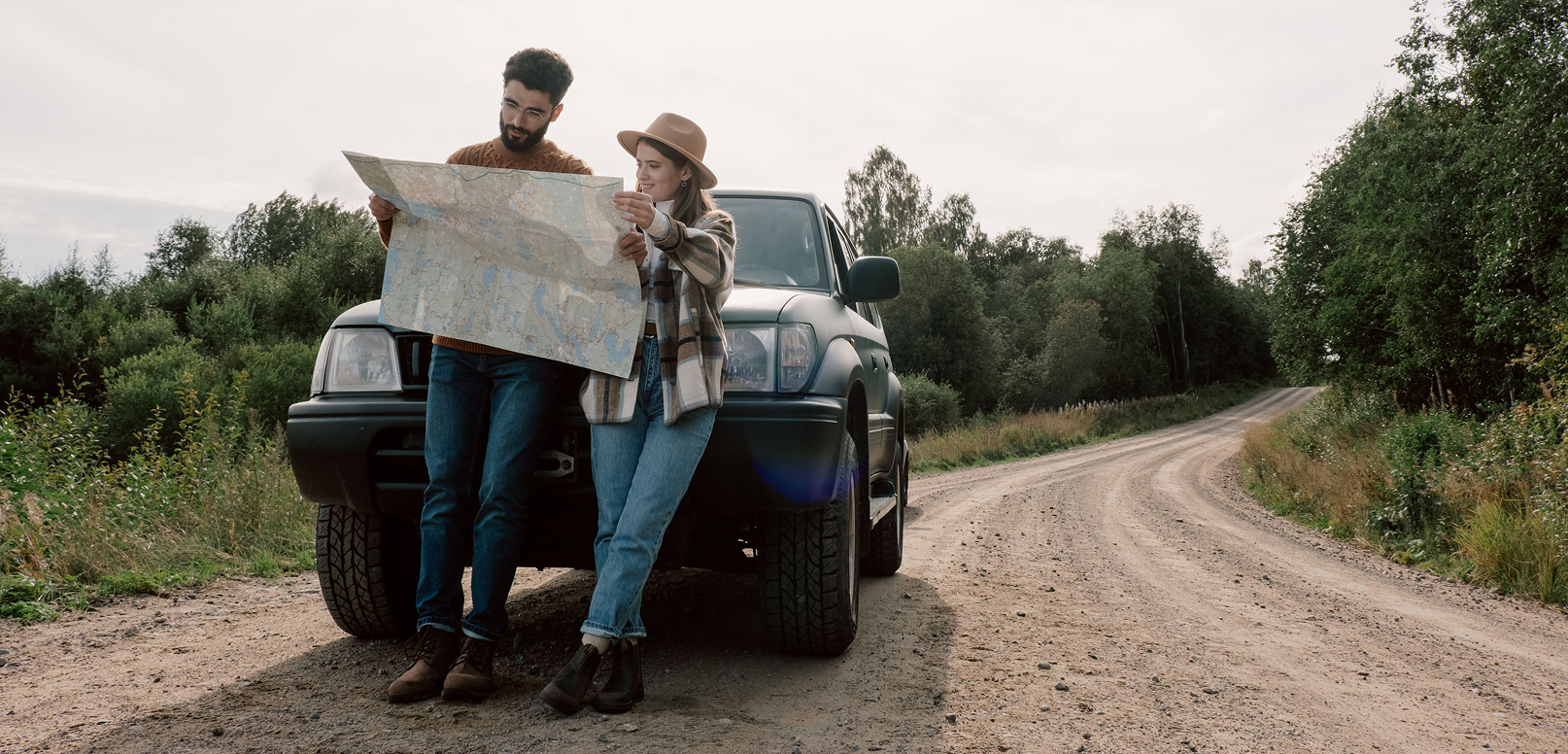
On the other hand, scheduling every single minute strips the joy right out of the adventure. If you’re constantly checking your watch to stick to a rigid timetable, the journey can easily become a chore rather than a holiday. The secret to a memorable road trip lies in finding a balance between structure and freedom. A loose plan removes the daily anxiety of figuring out the big logistical questions, while a flexible itinerary gives you peace of mind, but it never makes you feel trapped.
Anchor your journey with key bookings
You don’t need to plan every single thing, but you should lock in the non-negotiables. Secure your bookings early if there’s a popular national park, museum or restaurant you want to visit, map out your major stops and book your accommodation well in advance. Knowing you have a comfortable bed waiting for you at the end of a long day is a massive relief and means you can relax and enjoy the drive. Everything else can flow freely around these anchors.
Embrace detours and local recommendations
Magical travel moments can happen when you take a wrong turn and stumble upon a breathtaking coastal viewpoint, or when you stop for coffee and the barista tells you about a fantastic hidden beach just up the road.
Leave deliberate gaps in your itinerary so you can follow local advice – they'll have the sort of insights you won’t find anywhere else. If you spot an intriguing tourist sign pointing down a country lane, you want the freedom to go and explore it. When your schedule has some wiggle room, spontaneity naturally fills the gaps.
Build buffer time into your daily routine
One of the biggest road trip mistakes is underestimating drive times. A journey that takes three hours on a map could be longer depending on traffic, fuel stops, and any breaks you take to admire the scenery.
It’s also important not to cram too much driving into a single day. Aim for a sensible distance and add a few extra hours as a buffer – this means you still get plenty of time to explore without feeling rushed. If you want to spend an extra hour eating lunch al fresco or taking photographs of a beautiful valley, you can do just that without ruining your evening plans.
Budgeting beyond car hire
It's tempting to focus solely on the car rental price. But the actual cost of driving from A to B can be considerably higher once you factor in everything else. A little forward planning means no nasty surprises when you check your bank account at the end of the trip.

Fuel
Fuel is usually the most significant extra expense, and it's one that catches people out more than you'd expect. Costs vary widely depending on the size of the car, the distance you're covering, and local fuel prices in your destination. It's worth estimating your mileage before you go and checking current fuel prices in the areas you'll be travelling through to get a rough idea of what you might spend.
To avoid extra costs, you can pick a vehicle with a ‘Fair fuel policy’. You start with a fully tank and return the car with a full tank, so you only pay for the fuel you actually use.
Insurance
You also need to think carefully about insurance. Most standard rental agreements come with a high excess (the amount you'd pay if the car were damaged or stolen) and while the hire company will offer their own insurance, comparison sites and specialist providers may offer the same protection at a fraction of the price. It's well worth sorting this before you pick up the keys.
If more than one person will be driving, you'll typically need to pay to add an additional driver to the policy. Roadside assistance is another one. Basic cover is often included as part of an insurance package, but it may not stretch to things like flat tyres or running out of fuel, so an upgrade could be worth the small additional cost.
Parking fees and toll roads
Parking fees and road tolls are easy to overlook in the excitement of planning a route, but they can stack up fast, particularly in cities or on motorway networks that rely heavily on toll roads. Some countries charge per journey; others use a daily or annual vignette system. It's worth researching the specific rules for wherever you're headed.
Congestion charges and low-emission zones
In the UK and several European cities, you may also encounter congestion charges or low-emission zone fees – London's ULEZ is a well-known example. If your hire car doesn't meet local emission standards, you could be charged automatically, or worse, fined.
Fines
Nobody plans to get a fine. But speeding penalties, parking tickets, or missed toll road payments can result in admin charges from the car rental company on top of the original fine, so it's best to drive carefully, watch out for toll charges, and keep all receipts.
Good to know:
Other travel costs
Accommodation.
Food and drink.
Entry fees for attractions, national parks, or museums.
Mobile data and navigation. Roaming charges have returned for UK travellers in parts of Europe, so check your phone plan before you go and consider downloading offline maps as a backup.
Extra money for unexpected costs, car-related or otherwise. Having a buffer gives you peace of mind if something goes awry. For example, there are hidden fees that sometimes come with car hire, such as:
Young driver fees for drivers under 25 years old
Airport concession fees
One-way fees
Cleaning fees
Late return fees
Breakdown recovery levy
Common pitfalls and how to avoid them
Overestimating how far you can drive each day
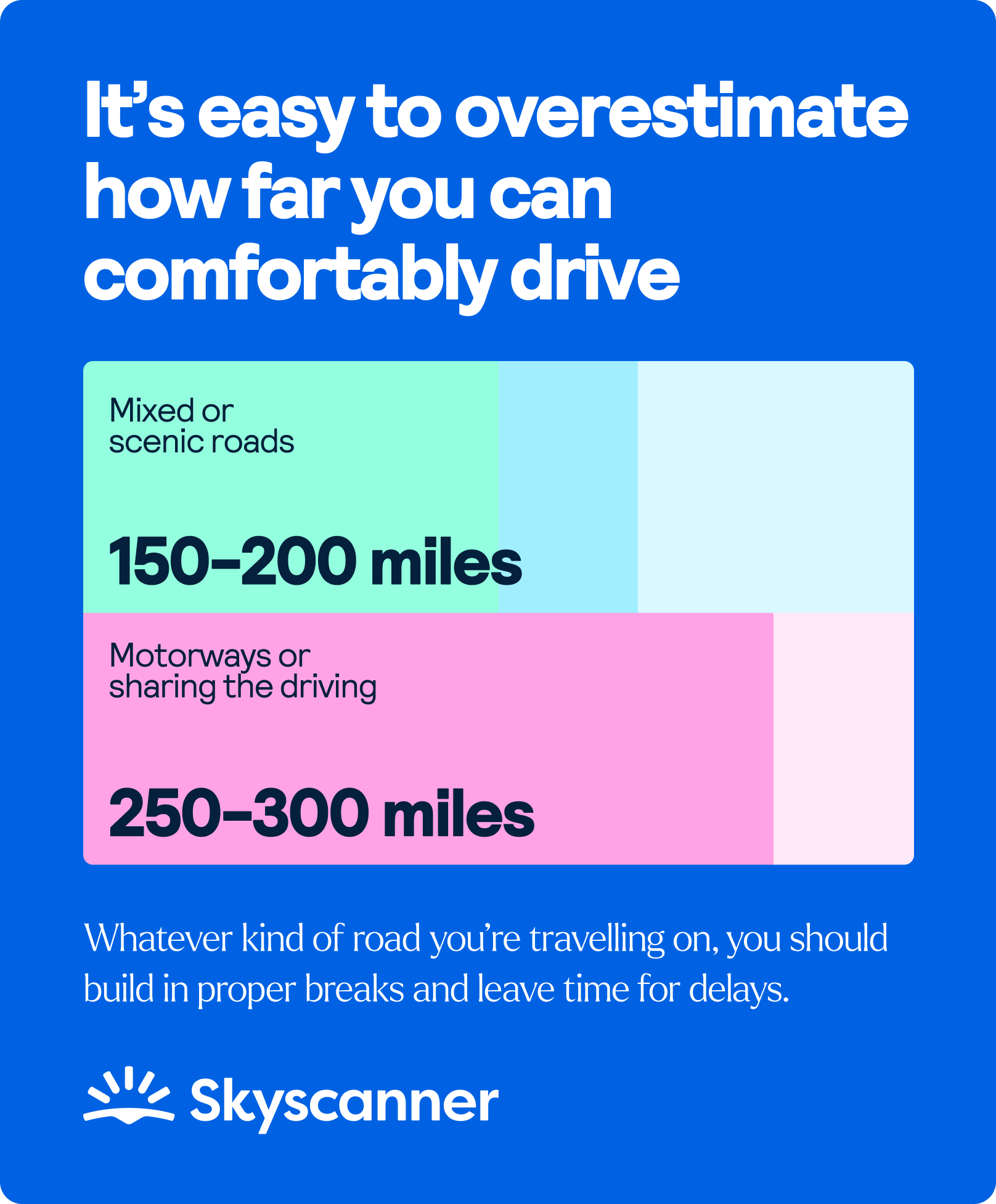
It’s easy to overestimate how far you can comfortably drive, especially if you’re used to judging distances by motorway travel. Driving fatigue builds gradually: your concentration drops, your reactions slow, and even simple decisions start to feel more complicated, particularly after several hours behind the wheel. 200 miles on a motorway may be straightforward, with steady speeds, clear signage and fewer interruptions, but 200 miles on a scenic route can take far longer and feel much more tiring because of bends, hills, villages, traffic, photo stops, narrow roads and slower speed limits.
For most travellers, a sensible target is around 150–200 miles a day on mixed or scenic roads, or up to 250–300 miles if most of the route is on motorways and you’re sharing the driving. Whatever kind of road you’re travelling on, you should build in proper breaks and leave time for delays.
Ignoring seasonal weather changes
Changing weather is another pitfall that can quickly disrupt both your timings and your budget. Heavy rain reduces visibility and increases stopping distances, while snow and ice can make mountain passes, rural roads and early-morning starts far more demanding than they might look on a map. In very hot weather, long drives can put extra strain on the car and on passengers, especially if you’re travelling through remote areas with limited shade or services.
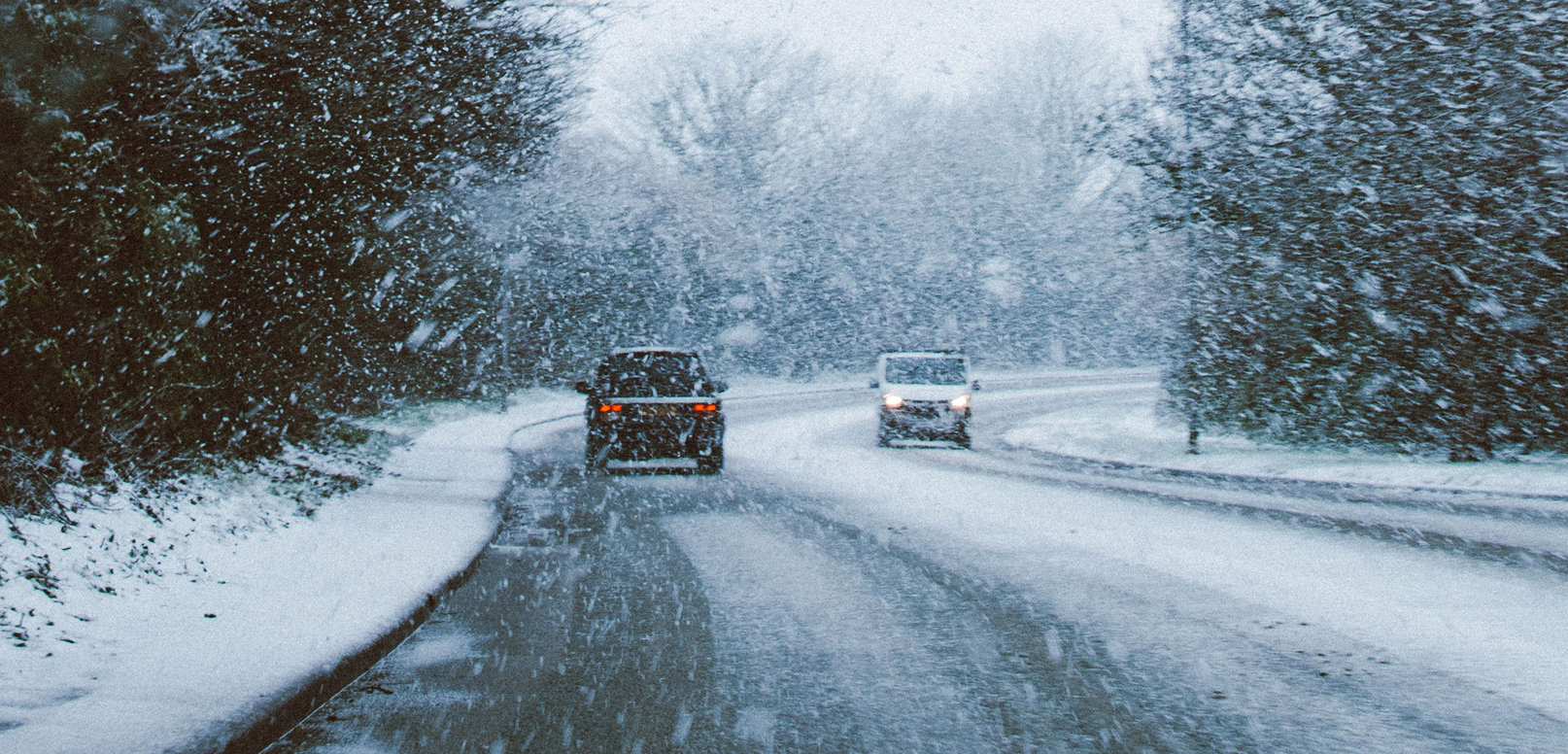
Before you go, check whether your hire car is suitable for the conditions you expect, make sure the tyres are in good condition and correctly inflated, and ask whether winter tyres or snow chains are required or available to hire in snowy regions. It’s also sensible to keep water in the car, plan fuel stops more carefully in extreme heat or cold and allow extra time when the weather turns poor.
Relying solely on a sat nav
There's something comforting about handing over navigation duties to a sat nav. For many drivers, this has become second nature, but that reliance can become a problem once you leave the motorway behind and head into more remote corners.
Mobile coverage can drop without warning in rural areas. When it does, many navigation apps simply freeze, reroute endlessly, or go blank altogether. Suddenly, what was supposed to be a scenic drive through the countryside turns into an anxious crawl, hunting for a road sign that confirms you're heading in the right direction.

The practical knock-on effects can be more serious than they first seem. Losing connectivity can mean missing a fuel stop you were counting on, being unable to find an alternative route around roadworks or an accident or adding significant time to a journey. That uncertainty can feel stressful, particularly if you're travelling with children, on a tight schedule, or in unfamiliar territory.
The good news is that a little preparation goes a long way: most major navigation apps allow you to download offline maps in advance, so your route stays accessible even without a mobile signal. Do this the night before your trip, covering a wider area than you think you'll need, just in case your plans change. Better still, consider packing a physical road atlas alongside your phone. It might feel old-fashioned, but a good road atlas never loses signal, never runs out of battery, and gives you a broader picture of the landscape that digital maps often can't.
Choosing a destination that suits your driving confidence, fits your travel style, and leaves room for the unexpected is what turns a good trip into a great one. Pair that with solid preparation (a well-planned route, a reliable vehicle, sensible packing, and a loose but realistic itinerary) and you’re already most of the way there.


