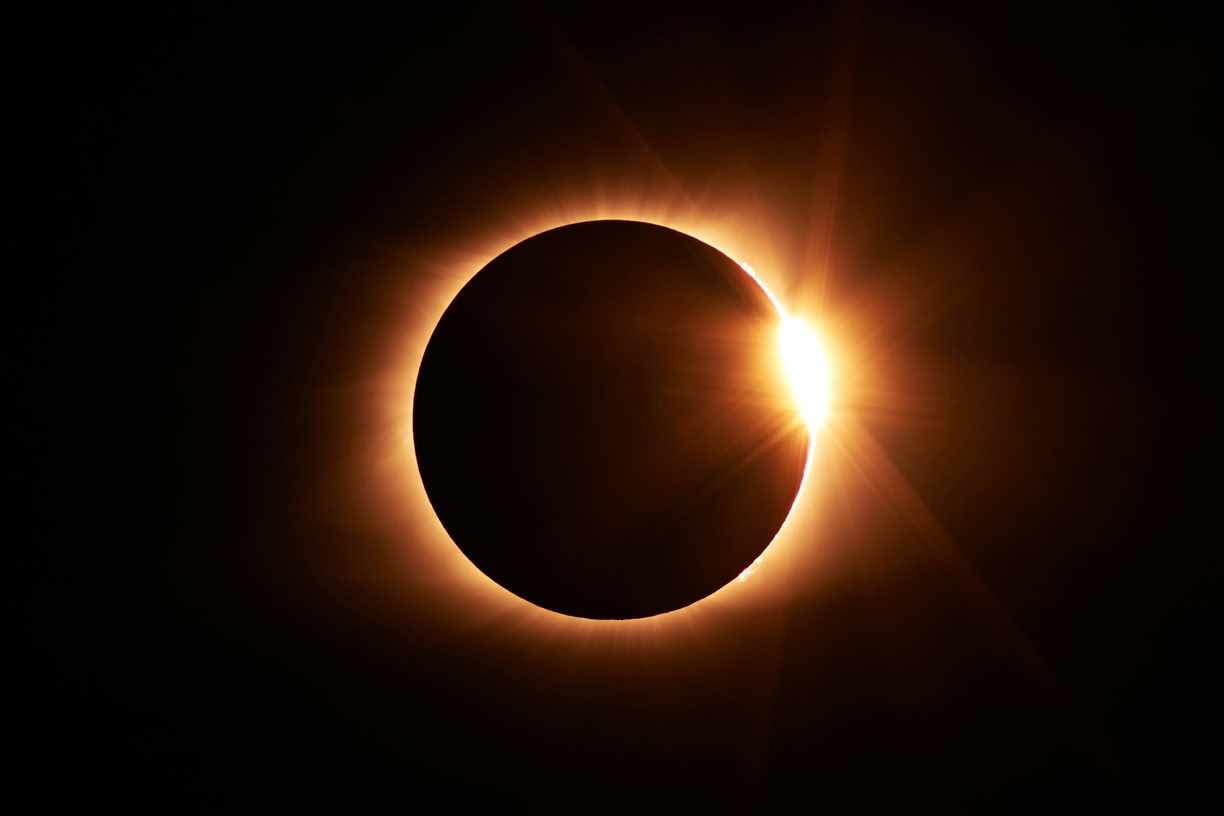
The 2026 solar eclipse will be visible from Edinburgh to Land’s End, but the view won’t be the same everywhere in the UK.
Discover where the best view points are, what time the eclipse is happening in the UK, and what safety precautions you should take with our guide.
Where to watch the 2026 solar eclipse in the UK
On Wednesday 12 August 2026, shortly after 6pm, the moon will take a bite out of the sun and what will remain is a downward-facing crescent, slowly getting more slender over the next hour.
When the eclipse will be at peak solar coverage, the Moon will cover around nine-tenths of the Sun. It will be the greatest solar-eclipse coverage visible from the UK since 1999. Eclipse chasers will need to wait another 55 years for a partial eclipse this close to totality, or until 2090 for the next total solar eclipse visible from the UK.
The event will be visible from Edinburgh to Land’s End but the amount of solar coverage won’t be equal throughout the UK. Here’s what to keep in mind:
Coverage becomes greater towards the south-west of the country.
A low evening sun means a clear view towards the west or west-north-west will shape what you see.
Plan to experience it from an open coastline or uninterrupted hilltop, prioritising a clear western horizon.
Will the solar eclipse 2026 be visible from the UK?
Yes. On Wednesday 12 August 2026, a solar eclipse will be visible from the UK, weather permitting. The UK sits outside the 2026 eclipse’s narrow path of totality, so it won’t be a total eclipse. Spain will be one of the best places to experience the total eclipse, along with Greenland and Iceland, but in the UK, we’ll still be in for a great celestial show as the sun will be covered from 88% in the far north-east of the country, to approximately 96% in the extreme south-west.
Specifically, London will see about 91% coverage, Cardiff around 93%, and Land’s End almost 96%. This means that for those viewing from the UK, the eclipse will appear most dramatic in the south-west, although a bright crescent of the sun will remain visible everywhere.
The best places to watch solar eclipse 2026 in the UK

Machrihanish
Best for a wild Scottish west-coast eclipse
Machrihanish sits on the south-western edge of Scotland beside the long, west-facing sweep of Machrihanish Bay. At its northern end, Westport Beach is a broad expanse of sand, offering low dunes and open Atlantic horizons, giving eclipse-watchers room to find a clear view of the narrowing crescent sun hanging low over the water (weather permitting). At maximum eclipse, the southern Hebrides may even form a distant outline along the north-western horizon.
Lower Lough Erne
Best for cinematic eclipse views in Northern Ireland
Situate yourself on the eastern shore of Lower Lough Erne in Northern Ireland’s County Fermanagh. Here, the view opens west across the water towards White Island and Davy’s Island, so on the evening of the eclipse deepens, as the sun dips above the lough, the will islands create a series of dark silhouettes across the evening horizon. The lough’s broad waters and wooded islands give the eclipse a cinematic setting, while paths around the country park open onto several lakeside viewpoints, giving visitors additional points to choose from for a clear west-facing position. Enniskillen makes the most practical base for accommodation and exploring the wider Fermanagh Lakelands.
St Bees and the Cumbrian coast
Best for dramatic coastlines views from the North of England
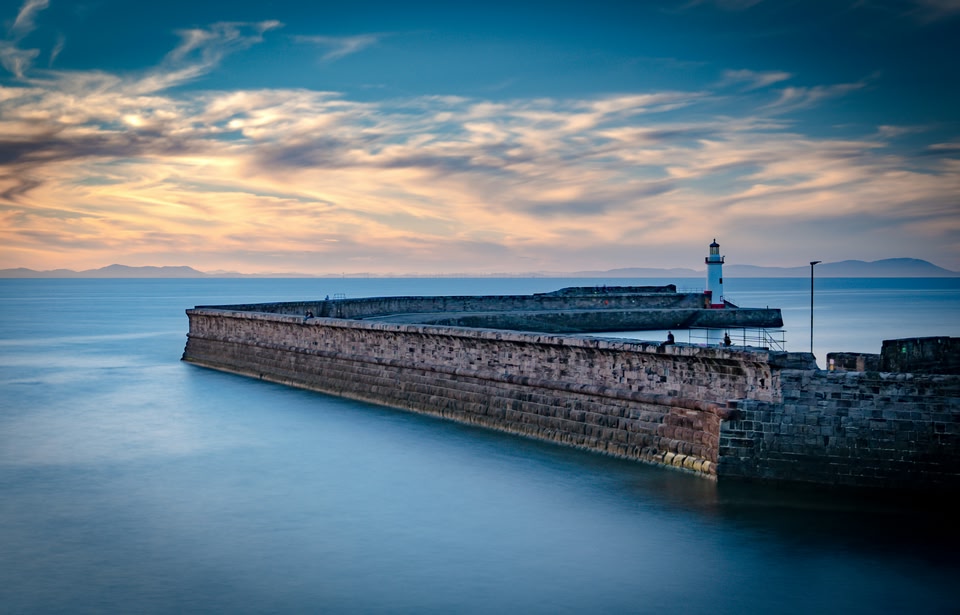
For northern England, St Bees offers broad beaches that face west across the Irish Sea beneath the red sandstone cliffs of St Bees Head, which rise to more than 300 feet. On a clear evening, views extend towards the Isle of Man, placing the low crescent sun above open water rather than behind a city skyline. Stay in St Bees or nearby Whitehaven, then combine the eclipse with a few days exploring the western Lake District and the lesser-visited Cumbrian coast.
Pembrokeshire
Best for coastal stargazing after the eclipse
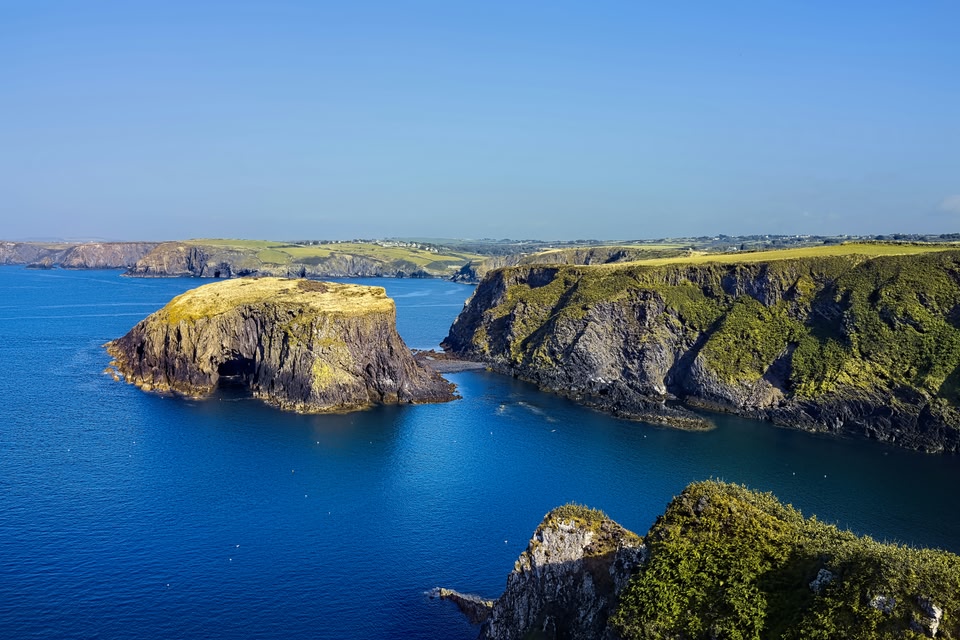
Pembrokeshire will see around 94% of the sun covered, placing it just behind Cornwall for eclipse coverage in the UK, and its coastal region is exactly where we’d head for the best vistas for the eclipse. St Davids makes a useful base for the Pembrokeshire Coast, while Whitesands beach offers broad stretches of sand and open sea views. Alternatively, Newgale beach extends for almost two miles, giving visitors ample space to find an uninterrupted western sightline. Newgale is also a recognised Dark Sky Discovery Site. With the Perseid meteor shower peaking overnight on 12–13 August and a new moon bringing virtually no moonlight, clear conditions could make it an excellent place to watch for meteors after the eclipse. Make a note though, the best views are expected after midnight and could last until 5am.

Exmoor
Best for a celestial light show
Exmoor is one of the few places where the eclipse can become an entire night beneath the stars. From elevated moorland, such as Dunkery Beacon, you can watch the light change across the hills as the crescent sun hangs above the western horizon. For a coastal view, Woolacombe and Saunton Sands provide long Atlantic-facing shorelines with more room to follow the eclipse as it moves towards sunset. Once darkness falls, Exmoor’s status as Europe’s first International Dark Sky Reserve becomes the reason to stay. The Perseid meteor shower peaks overnight on 12–13 August and, with virtually no moonlight, clear skies could reveal a steady display of meteors into the early hours.

West Cornwall
Best for near-total coverage
West Cornwall will boast the UK’s highest percentage of solar coverage during the 2026 eclipse. Land’s End will see around 95.8% of the sun covered, while nearby Sennen Cove offers a broad seafront alternative close to England’s western tip. Farther north, Pendeen Lighthouse stands on an exposed stretch of coast with far-reaching Atlantic views. As accommodation close to these viewing points is limited*, consider using St. Ives, Padstow or Newquay as a base if you have your own car or plan on renting a car from Newquay to explore the county. *Correct at the time of writing.
When time will the solar eclipse in 2026 begin?
Exact timings and duration will vary slightly by location. The eclipse begins earlier in Scotland, while maximum coverage arrives a little later in the south-west.
Location | What time will the eclipse begin? | What time will the eclipse be at maximum coverage? | What time will the eclipse end? | How much coverage can be expected here? |
Truro | 6.18pm | 7.16pm | 8pm | 95% |
Cardiff | 6.16pm | 7.13pm | 8.07pm | 93.2% |
Belfast | 6.10pm | 7.08pm | 8.03pm | 93.1% |
Manchester and Liverpool | 6.13pm | 7.10pm | 8.03pm-8.04pm | Around 91-92% |
Birmingham and Norwich | 6.15pm | 7.11pm | 8.04pm-8.05pm | Around 91-92% |
Glasgow | 6.08pm | 7.06pm | 8pm | 91.4% |
London | 6.17pm | 7.12pm | 8.06pm | Around 91% |
Edinburgh | 6.08pm | 7.05pm | 8pm | 90.7% |
Please note, these timings cover the eclipse from the moment the moon first begins crossing the sun until it moves clear again. All times are in British Summer Time and should be treated as a guide only.
How to choose a solar eclipse viewing spot
Maximum eclipse occurs between approximately 7.05pm and 7.16pm, when the sun will already be relatively low in the western sky. Buildings, trees, hills and headlands could therefore hide the sun before the eclipse ends.
Look for a viewing point with:
An uninterrupted view towards the west or west-north-west
Open or elevated ground without nearby buildings and trees
Safe public access away from roads and unstable cliff edges
Enough space to avoid blocking paths or crowding narrow viewpoints
Dark-sky status is not important for observing the sun itself. However, it becomes much more useful later in the night, when the Perseid meteor shower takes over.
Can you see the solar eclipse from London?
Yes. If you plan to watch the eclipse from London, you will see around 91% of the sun covered. The eclipse begins at approximately 6.17pm, and reaches maximum coverage at around 7.12–7.13pm before ending at 8.06pm.
But while the majority of the sun will be covered, the challenge in London will be ensuring the view isn’t blocked by surrounding buildings and parklands.
The Royal Observatory Greenwich will run a free livestream from 6.15pm, hosted by its astronomers and filmed through suitable solar-observation equipment for those who want more of an educational experience for this rare event, otherwise, you can simply enjoy the view at Hampstead Heath, Primrose Hill, and the Royal Greenwich Observatory.
How to watch the solar eclipse safely
Use certified eclipse glasses: your solar glasses must carry a label reading ISO 12312-2:2015 (E), which is the international safety standard.
Try indirect viewing: If you’re unable to get specialised solar glasses, a pinhole projector lets you watch an image of the eclipsed sun without looking at it directly.
Take extra care with cameras and binoculars: Never view the sun through binoculars, a telescope or a camera lens without a correctly fitted specialist solar filter placed over the front of the equipment.


