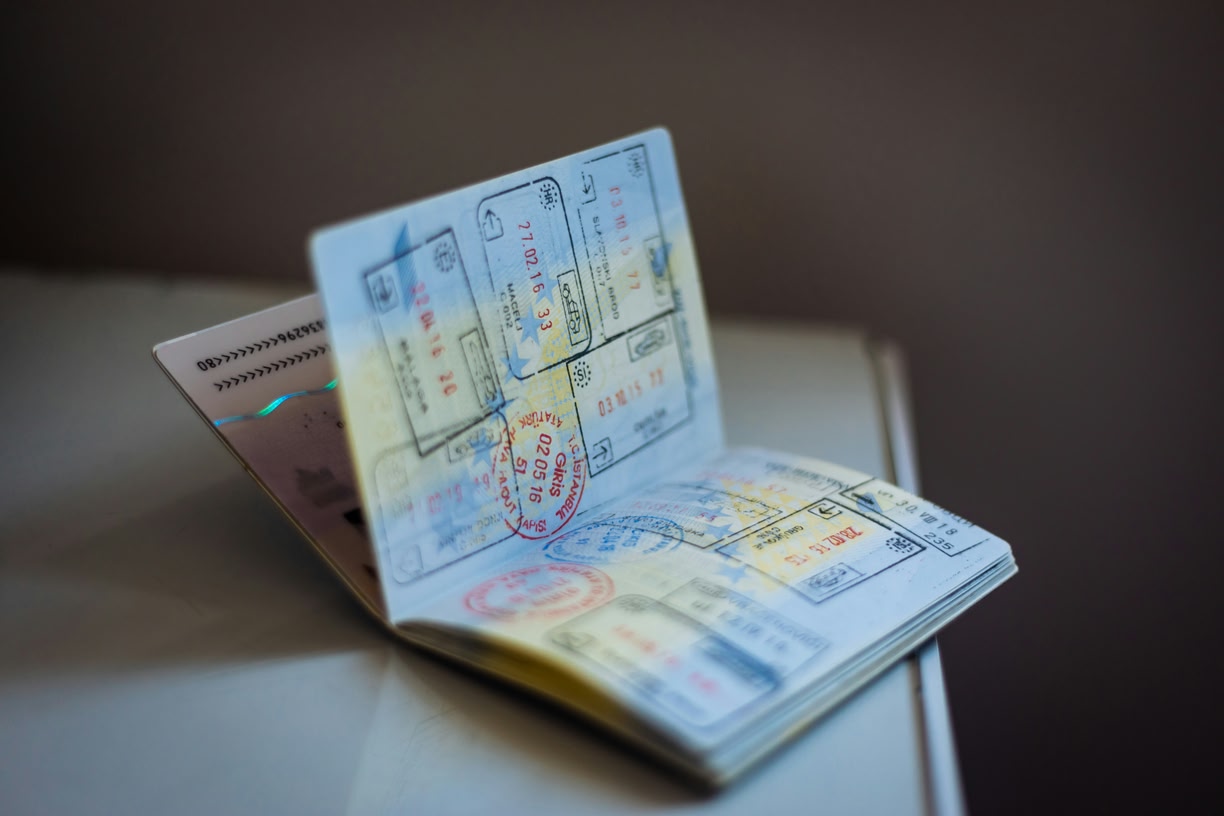

From the six-month passport rule to Europe’s three-month validity requirement, these are the passport rules UK travellers need to know before heading to the airport.
No one wants to be that person who gets to the airport, only to realise they’ve forgotten theirs at home. But even if you double, triple or quadruple check that you have your passport, simply having it isn’t enough to get you on the plane.
In fact, thousands of UK travellers are turned away at the airport every year for entirely avoidable issues. Some destinations need you to have at least six months left before your passport expires, while others, including most of Europe, have different rules around when your passport was issued and how long it stays valid after you leave. So here’s your checklist to follow to ensure your passport is valid for your trip, and the most common rules that catch UK travellers out - so you don’t make the same mistakes.

For a passport to be valid for travel, it’s not enough that the passport hasn’t expired. A passport’s expiry date tells you when the passport officially expires but not whether it meets another country’s entry requirements.
In fact, different countries have different rules around the expiry date and issue date that will determine whether your passport is still valid. For example:
For your passport to be valid for travel to the EU:
Your passport must have been issued less than 10 years ago on the day you enter.
Your passport must be valid for at least 3 months after the day you plan to leave the EU
For your passport to be valid for travel to the US, Japan and South Korea:
Your travel within the US must happen before the expiry date on your passport
For your passport to be valid for travel to India, China, Thailand the UAE and Turkey:
Your passport must be valid for 6 months from the date of your return
To check if your passport is still valid for your travel, check the rules for the destination you’re planning on visiting via the Foreign Office’s travel advisory hub.
What is the 6-month passport rule?
The six-month passport rule that is required by some countries means your UK passport must have at least six months left before it expires when you arrive in a country.
Several popular destinations require British citizen passport holders to have at least six months left on their passport from the date they arrive, such as:
Africa: Tanzania, Cape Verde, Egypt, Kenya
The Gulf: UAE, Bahrain, Qatar, Oman, Jordan
Asia: India, China, Thailand, Pakistan, Indonesia, Vietnam
The Caribbean: Trinidad and Tobago
South America: Brazil, Peru
The six-month passport rule does not apply everywhere. Some countries only require your passport to be valid for your stay, while others use a shorter buffer after you leave. Additionally, Europe has its own separate rules.
Where the 6-month rule doesn’t apply:
Schengen countries | The issue date must have been issued within 10 years of the arrival dates. The expiry date must have a buffer of atleast 3 months after the day you plan to leave the Schengen area. |
USA | The expiry date must fall after the day you plan to leave but no buffer is necessary. |
Canada | The expiry date must fall after the day you plan to leave but no buffer is necessary. |
Australia | The expiry date must fall after the day you plan to leave but no buffer is necessary. |
New Zealand | The expiry date must have a buffer of atleast 3 months after the day you plan to leave. |
Turkey | The expiry date must be atleast 150 days after your arrival date and your passport must have aleast 1 blank page. |
South Africa | The expiry date must be atleast 30 days after the day you plan to leave and your passport must have aleast 2 blank pages. |
Does the six-month passport rule apply to Europe?
No. The six-month passport rule does not apply to Schengen countries. That does not mean you can travel with a passport that expires shortly after your holiday, though. Europe has its own rules. Instead, your passport must:
Have more than 10 years on the expiry date before the date you arrive
Have more than three months left after the day you plan to leave the Schengen area
There are also additional rules for UK travellers coming to Europe, such as ensuring that your whole trip stays within the 90 days in 180-day limit.
What is the 10-year passport rule?
The 10-year passport rule requires UK travellers to ensure that their passport was issued less than ten years before the arrival date into countries where this rule is mandatory. Your passport must meet this stipulation in order to be valid for travel to the EU and within the Schengen area, among others.
This is a common rule that catches out many UK travellers because the 10-year passport rule is about your passport’s issue date rather than its expiry date.
Another watch out with this rule is that, before October 2018, people renewing an unexpired UK passport could carry over the time left on their old passport, up to nine months. This meant some new adult passports were valid for up to 10 years and 9 months. However, Schengen countries do not count those extra months so make sure you take that into account when checking your passport’s validity.

How do I check if my passport is valid for my destination?
Check the official entry rules:
Check passport requirements for the country you’re planning on travelling to via the Foriegn Office as well as visa requires and other travel advisory.
Check the expiry date
Check the issue date: This is especially important for travel to Europe. A passport can look in date if it’s not yet expired but it’s only valid for travel if there are still three months left on the expiry date from your departure date, and if the issue date meents the 10-year rule.
Passport validity rules for popular destinations for UK travellers
Destination | Passport validity requirement | Does the 6-month rule apply? | Does the 10-year rule apply? | What to be aware of |
Ireland | No legal passport is required for British nationals under the Common Travel Area | No | No | Your airline or ferry operator may require photo ID so it still may be necessary to carry a valid UK passport |
Spain | Issued less than 10 years before arrival and valid for atleast 3 months after leaving the Schengen Area | No | Yes | Check your issue date and your expiry date. Ensure you have applied for your ETIAS |
France | Issued less than 10 years before arrival and valid for atleast 3 months after leaving the Schengen Area | No | Yes | Check your issue date and your expiry date. Ensure you have applied for your ETIAS |
Greece | Issued less than 10 years before arrival and valid for atleast 3 months after leaving the Schengen Area | No | Yes | Check your issue date and your expiry date. Ensure you have applied for your ETIAS |
Turkey | Passport expiry date must be at least 150 days after arrival | No | No | You need atleast 1 blank page in your passport. |
USA | Passport expiry must be later than the departure date | No | No | UK travellers need to apply for an ESTA prior to travel. |
Thailand | Passport expiry date must be at least 6 months after arrival | Yes | No | You need at least 1 blank page. While there is no set date yet for Thailand’s new visa exemption scheme, when it does come into force, Brits will be permitted stays of up to 30 days rather than than the current 60 day allowance |
Dubai | Passport expiry date must be at least 6 months after arrival | Yes | No | Ensure you also check the requirements of your final destination if you are transiting in Dubai |
Ensure you check passport requirements for your whole route including transit requirements.

How long does a UK passport renewal take in 2026?
A standard UK passport renewal generally takes up to three weeks if applying in the UK via HM Passport Office’s website, which costs £102, or at UK passport offices, which will cost £115.50.
If applying from overseas, processing times vary by destination.
You’ll need to apply for a replacement when your passport has expired, is damaged or you don’t have enough time left on it for valid travel.
Urgent services are also accessible solely via a physical appointment at a HM Passport Office but availability for appointments are limited. These are:
One-day premium service:
This is only available for adult renewals only and costs £239.50
The earliest you can get an appointment if using this service is 2 days after you apply.
Collection is usually within four hours after your appointment.
One-week fast track service:
£192 for an adult passport or £156.50 for a child passport
The earliest you can get an appointment is the next day after you apply.
Your new passport will be delivered to you by courier 1 week after your appointment.
How long does a child’s passport last in the UK?
A child UK passport is valid for five years, rather than 10 like an adult UK passport. This may trip up families travelling together as issue and expiry dates will vary.
Check every family member’s passport as soon as you start planning a trip so you can ensure each one meets the requirements of the destination you’re visiting. Remember, the key check for a child’s passport is usually the expiry date:
For EU and Schengen destinations, it must have at least three months left after the departure date
For destinations with a six-month rule, such as Thailand or the UAE, it must have at least six months left from arrival.

Can you travel with a damaged passport?
No. You may be denied boarding at the airport or entry at border control if your passport is damaged. This rule commonly catches our travellers with UK passports so it’s important to know that your passport may count as damaged if:
The photo page or details cannot be read
Pages are ripped, cut or missing
The cover has holes, cuts or tears
The cover is coming away
There are water marks (water damage), ink stains or other stains on the pages
Rather than risking trying to travel with a damaged passport, replace it.
What if the name on my passport does not match my ticket?
The name on your flight booking should match the name on the passport you plan to travel with, and if a visa or travel authorisation is required for your trip, that too should be under the same name.
Travellers usually get caught out following name changes after marriage, divorce, etc. as well as those who commonly use nicknames.
A different first name or surname can cause problems at check-in or boarding, so contact your airline as soon as you spot a mistake or difference in your documentation rather than assuming that a small difference won’t matter. Airlines set their own rules on name corrections, fees and deadlines, so while some allow minor amendments, others may require a rebooking.
What passport rules apply if I'm travelling on a non-British passport?
If you live in the UK but travel on a non-British passport, the rules that determine whether your passport is valid for travel may differ from those for British passport holders.
Always check the entry requirements for the nationality shown on your passport, your destination and any countries you transit through. Use official travel advice from the government that issued your passport, as well as the destination country’s official entry guidance.
Dual nationals should be aware that some countries require their citizens to use that country’s passport when entering or leaving. When travelling to the UK, British dual nationals should usually carry a valid British passpor, or alternatively, another valid passport with a Certificate of Entitlement confirming the right of abode in the UK.


