
Portugal has been attracting remote working Brits over the past few years, and with its culturally rich cities, photogenic coastlines and affordable living costs, it’s easy to see why.
Multiple Portuguese cities appear on The Nomad List (which sees 37,000 digital nomads vote on the best places to work remotely) including Lisbon, Porto, Ericeira and Lagos. And now, with the introduction of the Digital Nomad Visa, it’s never been a more attractive destination for those looking to switch up their work-from-home routine.
If you’re seriously considering working from this diverse and beautiful country, here’s what you need to know.
First things first: why Portugal?
Thanks to its sun-ripened produce, pristine beaches, vibrant cities and fantastic wine, Portugal is almost too good to be true. Though it’s just a two and a half hour flight (on average) from the UK, it feels a world away, particularly when you factor in its surrounding islands such as Madeira, the first place in the world to launch a Digital Nomad village (more on that later). Communal workspaces, laptop-friendly cafes and all-important sun loungers abound, so you’re all but guaranteed to find whatever gets your creative juices flowing.
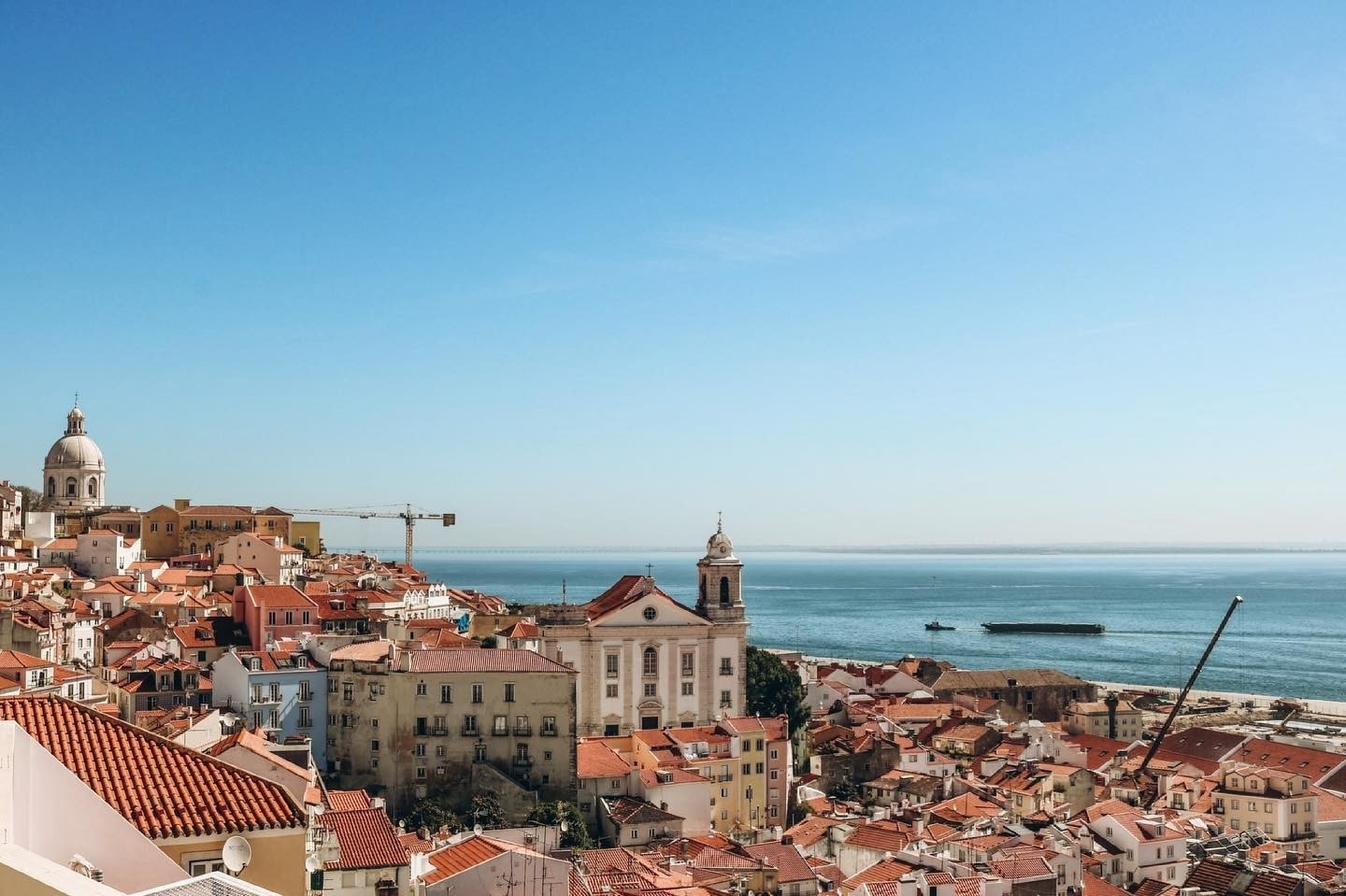
Is there good Wi-Fi in Portugal?
Portugal has some of the best internet connections in Europe and free Wi-Fi can be found in most bars, cafes and restaurants in major cities. Purchasing a data sim card is very affordable too, so there are multiple ways to stay connected.
When you’re booking a place to stay with Skyscanner’s hotel search, open up the filters tab and search for places that offer Wi-Fi. You’ll find it under ‘amenities’.
Some of our favourites are:
- In Porto: Apartamentos Villa Bolhao
- In Lisbon: Madalena Hermitage
What type of visa do I need to work remotely and travel in Portugal?
In 2022, Portugal introduced the Digital Nomad Visa. Split into two options, it allows workers to stay for either up to a year, or up to five years, depending on their preference.
The Temporary Stay Visa is valid for one year, and allows workers to live and work in Portugal without having to establish residency. To qualify, you must:
- Earn at least four times the Portuguese monthly minimum wage, which comes to a total of €2,820 euros (and have the paperwork to prove it)
- Provide proof of fiscal residence
- Provide proof of work – so paperwork from clients or employers proving you work for them
For those looking to stay longer in Portugal, the Residence Visa for Digital Nomads is more suitable. Initially valid for two years, it can be extended for another three, for a total of five years in the country. Applications must be made through the Portuguese Consulate in the UK and the worker must convert their visa to a permit via the Border and Immigration control within 120 days of landing in Portugal. To qualify you must:
- Have a NIF and Portuguese bank account
- Earn at least four times the Portuguese monthly minimum wage (€2,820 total, with the paperwork to prove it)
- Have proof of personal tax residence in Portugal (a 12-month rental agreement registered with the tax authority)
- Have an employment contract from an employer based outside of Portugal
- For freelancers, you’ll need a contract that proves you’re working with clients

Are there other types of visas?
Yes. The D7 Passive Income Visa could also be of interest to those looking to work remotely. Initially applicants are given 120 days in the country, then they must apply for a residency permit which is valid for two years. Again, you must prove you can afford to keep yourself and your family afloat with a minimum of €8,460 a year.
Potentially less relevant to remote workers (but good to be aware of) are the D2 Entrepreneur and Portugal Golden Visas, which cover those looking to invest in the Portuguese economy and stay long term.
There is also a tourist visa which covers stays of 90 days or less.
Miss the office? Try Portugal’s co-working spaces
If social interaction is an important part of your professional life, holing up in a co-work space could be a great option. Most major cities have a variety of offerings, but in Lisbon we recommend the plant-filled Second Home Lisboa, which offers social events such as wellness classes, community breakfasts and a surf club.
In Porto, Porto i/o has three workspaces set in various historical buildings around the city and focuses on community, running a variety of classes and social get togethers. In Braga, 24/7 Factory Braga supplies a creative working space inspired by the plastic creations of Andy Warhol.
The sub-tropical archipelago of Madeira has plenty of co-working options, but remote workers should start with the Digital Nomad Village in Ponta do Sol, just 30 minutes west of the country’s capital, Funchal. Here, remote workers will not only find a dedicated Digital Nomad working space, but receive advice on accommodation, be invited to join a Slack group populated by other digital nomads in the region and be inundated with social activities that range from dog walking to burpees on the beach.
How to do it
Part of Portugal’s attraction to UK citizens is that its cost of living is very affordable, so once you get there, outgoings are what you make them. If you’re looking to minimise overall costs, consider taking off-peak flights (filter results in the Skyscanner flight search) and do some research into affordable accommodation before you leave.
You’ll also want to be able to get around and explore while you’re there, so consider hiring a car to make those weekend trips easier.
A remote working holiday doesn’t mean forever
Working remotely and travelling can be fun, but staying in one place indefinitely can make things complicated. Before committing, remember:
- If you’re living in a destination, you’ll be eligible to pay tax there. Usually 180 days (about six months) is the maximum you can stay without registering for tax, but it’s worth checking with immigration
- If you’re employed and working from home it’s best to ask for your employer’s permission before jetting off to another country. As well as being good manners, your employer might have tax reporting obligations to that country
Remote working holiday FAQs
With WFH becoming more common during the pandemic, more jobs than ever are suitable for travel. Basically, any job that you can do from your kitchen table, you can do from a cafe in Lisbon (or Chiang Mai, or Bridgetown… or anywhere with a good Wi-Fi connection). You should speak to your boss to let them know you’re planning to be out of the country. As well as sorting out any potential tax issues, it also gives you the chance to alleviate any worries they might have.
This is a bit of a legal grey area. Because remote working is a fairly new phenomenon, a lot of legislation is yet to catch up. Technically you can’t work while you’re on a tourist visa, however this definition of work is fairly traditional and usually applies to working for local companies. Working independently online is different. Usually, if you’re spending less than 180 days in a destination, you won’t need any special permit.
As long as you spend less than 180 days in your destination, it’s unlikely you’ll be eligible for tax there. You pay tax in whichever country you’re a tax resident in. So, if you’re planning to work remotely and travel, it’s important to make sure you spend at least 183 days in the UK each tax year. If your only home is in the UK, this drops to 30 days per tax year. You also need to have owned, rented or lived in your home for more than 91 days.
Want to read more?
- How to make the most out of your travel cards and currency: our tips and tricks to maximising your cash abroad
- The best destinations to visit in May: From the Far East to European shores, these are the hottest locations to enjoy in May
- How to work out your holiday budget: A guide to using the UK Skyscanner budget calculator to calculate how much money to bring on holiday


